
1991 year
27388 he.
Ph. No.
Email
https://nerija.lrv.lt/
Objectives of Establishment
The Curonian Spit National Park is distinguished by its unique landscape. It is undoubtedly the most valuable protected area in Lithuania. In 2000, the Curonian Spit was included in the UNESCO World Heritage List. The Curonian Spit National Park was established to preserve:
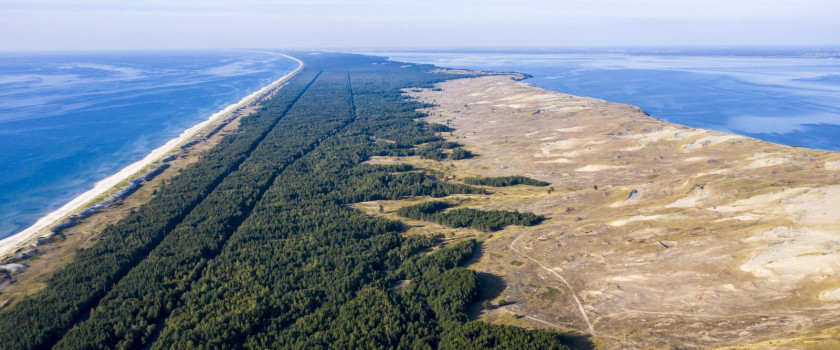
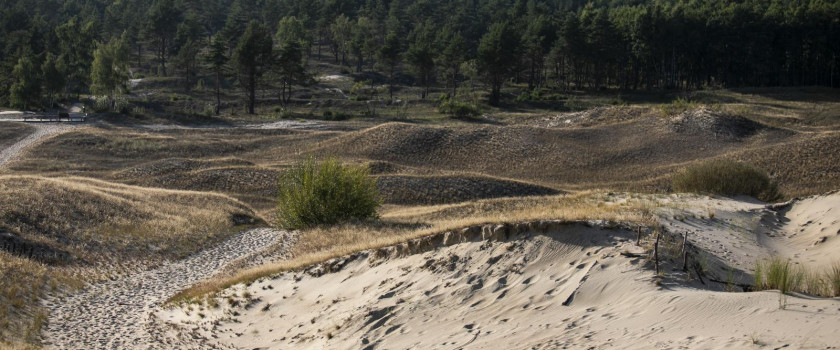
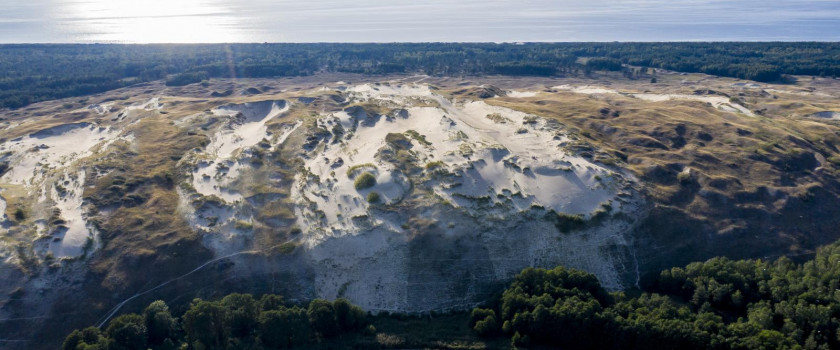
The Great Dune Ridge of the Curonian Spit, including the ancient parabolic dunes near Juodkrantė, the grey dunes in the Agila–Nagliai stretch, the shifting Parnidis dunes, the buried ancient soils, as well as the coastal and lagoon-side wetland complexes, the protective coastal dune ridge, the unique vegetation of the Curonian Spit, its forests with remnants of primeval forest, and its fauna;
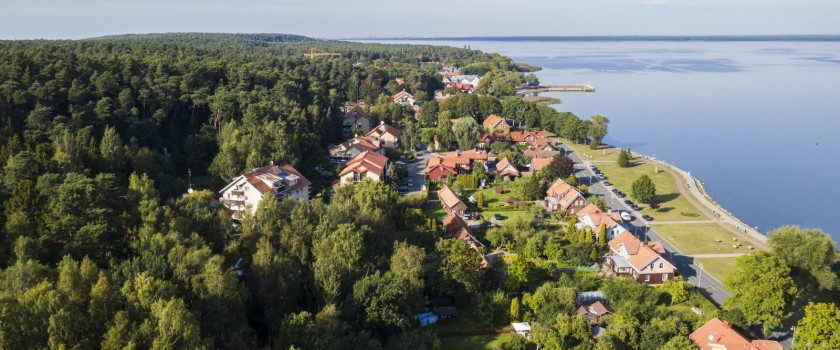
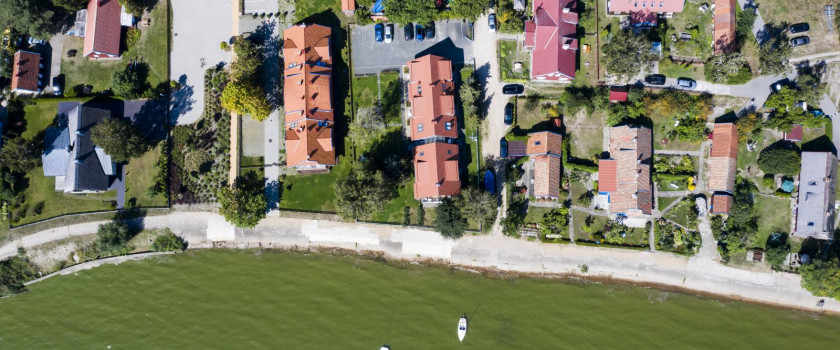
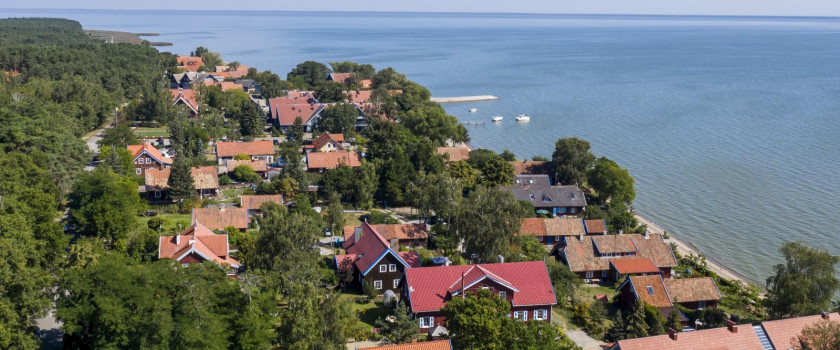
The unique cultural heritage, including authentic immovable cultural properties along the lagoon coast, ethnographic fishermen’s homesteads, historic villas in the settlements of Nida, Juodkrantė, Preila, and Pervalka, cultural layers of ancient buried villages, memorial sites, and to foster the characteristic traditions of wooden architecture.
Outstanding Value
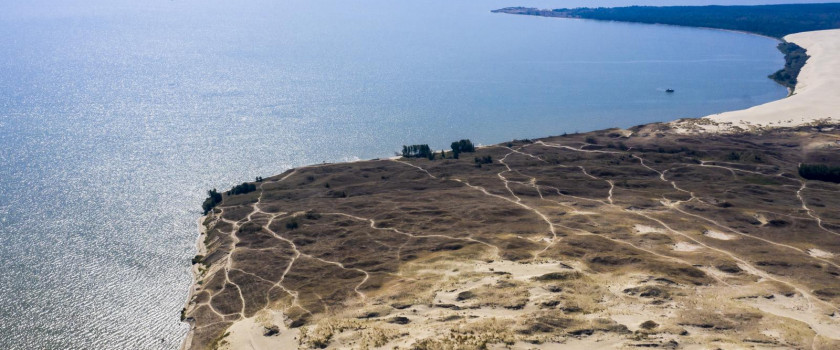
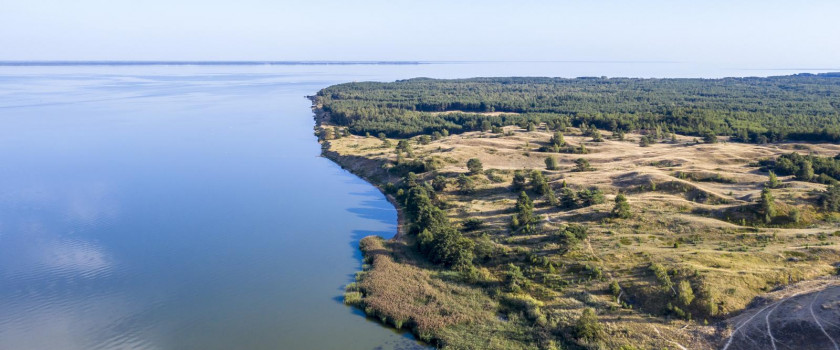
The outstanding universal value of the Curonian Spit was internationally recognized in 2000 when it was inscribed on the World Heritage List. It represents a living landscape shaped by the sea, the wind, and humans — a narrow strip of sand stretching between the sea and the lagoon, with sandspits reaching into the lagoon. Along the seaward side, a man-made protective dune ridge mirrors the coastline. The Great Dune Ridge stands as the Spit’s dominant feature, highlighted by distinct dunes such as Parnidis, Vecekrugas, Sklandytojų, Hagenas, and others, ancient parabolic dune remnants near Juodkrantė, and the grey dunes between Nagliai and Agila. Unique buried ancient soils and lagoon peninsulas (spits) like Bulvikis, Žirgai, and Libis are found here.
Only here can one see a wealth of sand-dwelling plant species and fragments of ancient forests. Unique insects, not found elsewhere in Lithuania — species characteristic of southern and steppe regions — inhabit the area. The Curonian Spit is a critical segment of the White Sea–Baltic Sea migratory flyway, through which around 15 million birds pass annually.
The distinctive nature is reflected in equally distinctive human creations. The original fishermen's houses, the weather vanes of kurėnai (traditional boats) with their colorful carvings, and the historic villas harmoniously adapted to the delicate landscape show the deep connection between people and their environment. In the settlements, ethnographic fishermen’s house architecture blends seamlessly with ornately decorated villas, red-brick churches, and schools. One of the most unique ethnographic elements is the proudly spinning kurėnai weather vanes adorned with colorful carvings.
Landscape
The Curonian Spit National Park features a uniquely structured landscape, characterized by distinctive natural and cultural heritage sites and offering great potential for recreation and educational tourism. The Great Dune Ridge is central to the peninsula's identity, along with parts of lagoon-side settlements that have preserved their ethnocultural distinctiveness. In terms of landscape value, the Curonian Spit National Park belongs to the highest category.
The landscape diversity of the park includes the following main types:
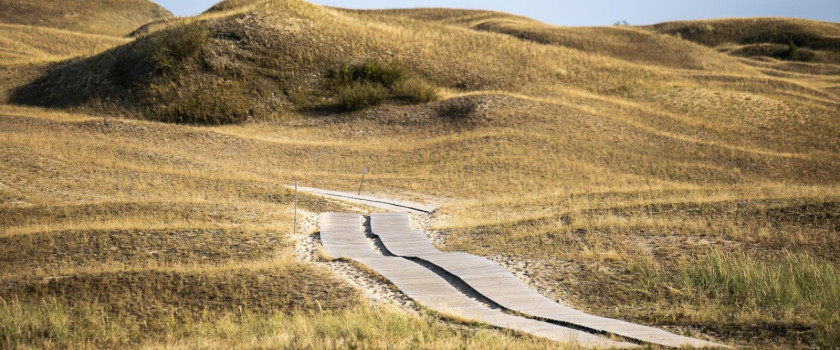
Open stretches of major sand dunes;
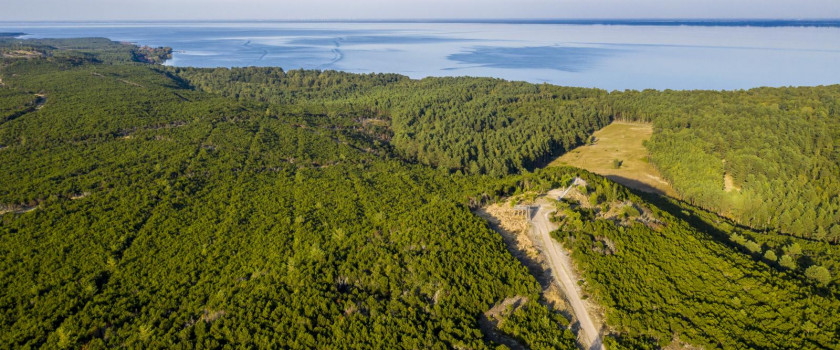
Afforested sections of the Great Dune Ridge;
Forested ancient parabolic dune zones;
Forested small dune ridges;
Sandy flatlands and rolling or dune-covered coastal wetlands;
Sandy beaches and protective dune ridges;
Sandy lagoon spits (peninsulas);
Urbanized lagoon-side settlements;
The lagoon waters of the Curonian Lagoon;
Open Baltic Sea areas.
The Curonian Spit National Park represents the ethnocultural region of Lithuania Minor.
There are 704 plant species recorded, of which 1 is protected by the European Community and 21 are listed in Lithuania’s Red Data Book. There are 1277 recorded animal species: 48 mammals (17 protected by the European Community, 8 listed in Lithuania’s Red Data Book), 281 bird species (56 protected by the European Community, 61 listed in the Red Data Book), and 50 fish species in the lagoon (5 fish species and 1 lamprey species included in the EU Habitats Directive Annexes II and V). In the open sea, 70 fish species are found, of which 6 are protected by the European Community and 2 are in the Red Data Book. There are 13 amphibian and reptile species (6 protected by the European Community, 2 listed in the Red Data Book), as well as 889 butterfly, 746 beetle, and 26 ant species (2 protected by the European Community, 11 listed in the Red Data Book).
Reserves and Protected Areas
To preserve natural and cultural heritage, the Curonian Spit National Park includes 2 nature reserves and 14 sanctuaries (5 landscape, 2 geomorphological, 1 thalassological, 1 historical, and 5 urban).
In the nature reserves:
Grobštas Reserve protects a unique natural complex, including the active Great Dune Ridge, distinctive tussock formations, wet coastal plains, protective dune ridges, sandy areas, sites of rare plant and animal species (listed in Lithuania’s Red Data Book), and habitats of European Community importance.
Nagliai Reserve preserves unique landscapes, including grey dunes, tussock fields, Agila and Lydumas peninsulas, wooded coastal wetlands, protective dune ridges, and sandy areas.
In the landscape sanctuaries:
Alksnynė Sanctuary protects afforested dunes and wetland formations;
Garnių Kalnas Sanctuary preserves old-growth parabolic dunes and distinct peninsula features;
Karvaičiai Sanctuary protects the highest dunes on the Lithuanian side of the Spit (Vecekrugas, Karvaičiai, and Preila dunes) and other notable features;
Parnidis Sanctuary features forested and partially shifting large dunes and wetland areas;
Raganų Kalnas Sanctuary protects ancient parabolic dunes and rare species sites.
In the geomorphological sanctuaries:
Angių Sanctuary preserves small forested parabolic dunes and Angių Hill;
Hagen Ridge Sanctuary protects the forested tip of the Great Dune Ridge with Hagen Hill.
In the Neringa Thalassological Sanctuary, shallow nearshore marine ecosystems with habitats of European Community importance are preserved.
In the Amber Bay Historical Sanctuary, the historically and archaeologically valuable former industrial part of Juodkrantė is preserved, including old plantings and structures.
In the urban sanctuaries:
Juodkrantė, Nida, Pervalka, Preila, and Smiltynė preserve planning layouts, spatial structures, architectural values (especially historic villas), and memorial sites.
Heritage Sites
The national park features 11 natural monuments: the dunes of Vecekrugas, Agila, Karvaičiai, Skirpstas, and Vingis; the peninsulas of Lyguma and Nagliai; the hills of Angių, Raganos, and Urbas; and the marl outcrop at the lagoon.
Additionally, there are more than 200 protected cultural heritage sites within the park.
 Nature Heritage Site
 Other natural object
 Cultural heritage object
 Museum, Exposition
 Cognitive, educational trail
 Other path, route
 Holiday resort
 View Place
 Bird observation site
 Other
Other
Protected Areas Product Label
Protected areas attract visitors with their natural and cultural values. Many visitors to national or regional parks wish to take home a souvenir or simply a good memory. To draw attention to products and services provided by local residents, the Protected Areas Product Label was created, featuring a stylized ethnographic bird.
The Protected Areas Product Label helps identify products that are ecological, authentic, produced by local communities without harming the environment or wildlife, and beneficial to human health.
The holder of the label is primarily someone who lives or operates within a protected area and whose activities do not harm the area's valuable resources. This initiative aims to promote the local economy, create better living conditions for those residing in protected areas, and encourage partnerships between local communities and the administrations of protected areas.
Products and services bearing the Protected Areas Product Label can vary widely: from honey, herbal teas, and jams to accommodation, catering, guiding services, and traditional handicrafts.
The Protected Areas Product Label is one of the measures to promote sustainable tourism. It is intended for local producers, craftsmen, tourism service providers, and other local residents whose activities contribute to the development of sustainable values within Lithuania's protected areas.
The symbol of the Protected Areas Product Label—a bird—is common to all protected areas in Lithuania, differing only by the name of each park. Lithuania has five national parks and thirty regional parks.
Thus, when visiting Dzūkija National Park, you can purchase black ceramics crafted by local artisans, while traveling through Rambynas Regional Park, you can buy honey collected by bees in the flooded meadows of the Nemunas River, or herbal teas gathered from the forests of Sirvėta Regional Park.
The Protected Areas Product Label seeks to encourage local residents to engage in nature-friendly activities and to inspire park visitors to purchase unique, authentic, and ecological products.
Documents required to obtain the ST product mark:
ST_prod_zenklo_naudojimo_gaires_11.pdf
ST_prod_zenklo_NUOSTATAI_11.docx
Visitor’s Memo
PERMITTED:
Relax only in designated areas – recreation sites and rest areas;
Camp (set up tents) only at Nida campsite (Taikos St. 45A, Neringa 93121);
Light campfires only in specially designated fire pits.
PLEASE:
Protect the environment, natural and cultural values, conserve natural resources; do not break trees or bushes, do not pick rare plants, do not disturb anthills or bird nests, do not scare nesting birds, and do not disturb animals or alter their habitats;
Report any observed cases of damage to natural or cultural heritage or other violations to the police, the Environmental Protection Inspectorate, or the National Park Directorate;
Handle fire safely – always monitor campfires and never leave fires unattended;
In case of fire, take all possible measures to extinguish it; if impossible, immediately notify the fire department or the National Park Directorate;
Do not litter roadsides, lakeshores, or other areas; upon leaving, make sure to tidy up the recreation or camping site. If waste sorting containers are available, sort waste according to instructions;
Comply with rules regarding vehicle driving and parking in forests and near lakes; park vehicles only in designated areas and along roadsides where it does not endanger traffic safety, violate traffic regulations, infringe on others’ rights, or harm the environment;
Preserve visitor facilities and structures; report acts of vandalism to the National Park Directorate or the police;
Follow boating regulations on water bodies;
When berry picking, mushrooming, or fishing, adhere to the Rules for the Use of Minor Forest Resources and the Rules for Amateur Fishing and Fish Protection;
Respect the rights and interests of other natural resource users; avoid making noise, playing loud music, or otherwise disturbing other visitors or local residents; do not endanger the safety of others;
For any questions, contact the National Park Directorate.
PROHIBITED:
Driving, stopping, or parking motor vehicles off paved roads;
Blocking barriers or entrances to forests;
Staying overnight in tents, campervans, or cars, except in Nida campsite;
Visiting the Nagliai and Grobštas Strict Nature Reserves, except on the Nagliai Educational Trail and bicycle paths;
Climbing up or descending steep dune slopes;
Disembarking from watercraft on the Curonian Lagoon shore within the Grobštas and Nagliai Nature Reserves;
Littering or causing damage to nature;
Building campfires outside of designated recreation areas.
 Museum, Exposition
 Cognitive, educational trail
 Other path, route
 Holiday resort
 View Place
 Bird observation site
 Other
Other

 Geological
 Geomorphologic
 Hydrogeological
 Hydrographic
 Botanical
 Zoological
 Nature school
 Visitor centre
 Nature Heritage Site
 Other natural object
 Cultural heritage object
 Handmade products
 Services

