
1992 year
12288 he.
Ph. No.
Email
https://dzukijossuvalkijosstd.lrv.lt/lt/verp/
Establishment objectives
1. To preserve the Šlavantas - Veisieiai - Kapčiamiestis Lake District - a system of intersecting lake double-clones, a botanically valuable lake between the lakes of Liūnelis and Šlavantėlis;
2. To preserve cultural heritage values, including the urban complex of Veisiejai, the castle mounds and the alcoves;
3. Preserve the stability of the natural ecosystem, the components of the biota, the distinctive flora and fauna;
4. Restore destroyed and damaged natural and cultural complexes and objects;
5. Conduct research and observation, collect information in the fields of nature conservation, cultural heritage protection and other areas;
6. To create conditions for the development of cognitive tourism and recreation in the designated areas and places defined in the regional park management plan (planning scheme);
7. Regulate economic activities and construction development in accordance with the regional park management plan (planning scheme);
8. To carry out educational and cultural activities, to promote natural and cultural heritage and its protection.
Exceptional values
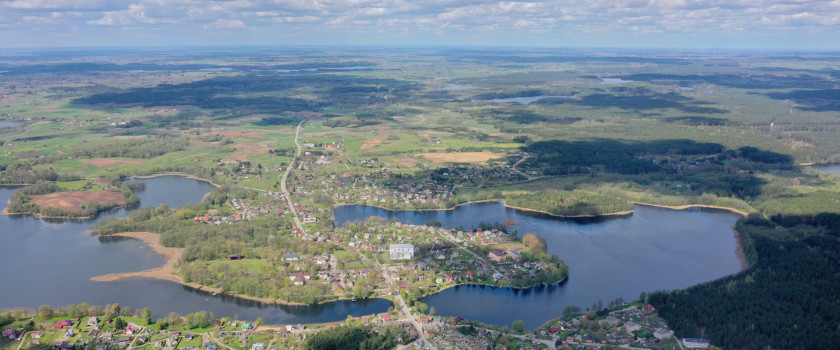
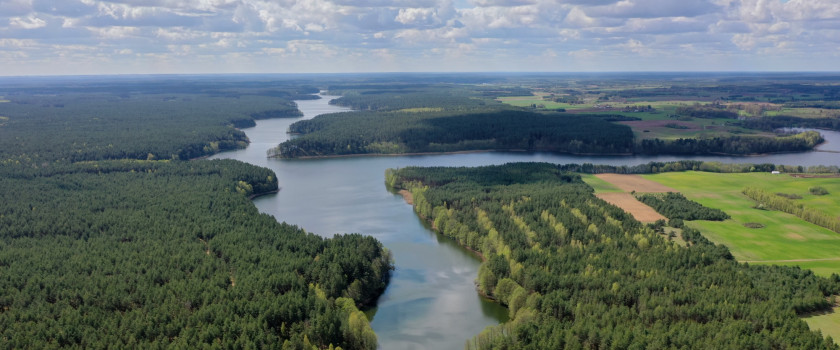
Veisiejai Regional Park is located in the most distinctively hilly and lake-like part of the Southern Lithuanian highlands. It is one of the most wooded parks in Lithuania. The surface of southern Lithuania, where the territory of the Veisiejai Regional Park extends, is geologically and gemorphologically the oldest and has undergone the longest evolution in the country. Its age and formation is mainly linked to the last few glaciers that covered the northern part of Europe, their degradation, the erosion by meltwater, and the subsequent processes that took place in rivers, lakes, marshes, slopes, and windswept areas.
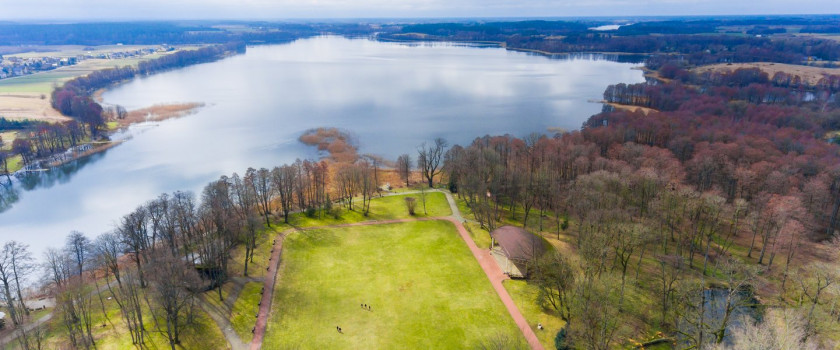
The entire territory of the Veisiejai Regional Park is covered with lakes, the largest of which are Ančia, Šlavantas, Snaigynas and Vernijas. Lake Ančia is the largest lake in the territory of the Regional Park, covering an area of 490.8 ha. Its surrounding landscape is one of the most distinctive values of the Veisiejai Regional Park, representing the exceptional value of the Veisiejai Regional Park. The lake is surrounded by a wide plain of dunes two to four metres high, washed by glacial rivers. Lake Ančia has been little affected by human activities and has not undergone a pronounced process of silting. On the eastern shore of the lake are the dry pine forests of the Ilgininkai forest, on the western shore is the Gudiškės forest, and on the northern peninsula is the only town in the park area - Veisiejai.
Biodiversity
Sites of European Community importance: 9180 ditch and slope forests, 9050 herbaceous spruce forests, 7160 non-alkaline springs and vernal pools, 7110 active raised bogs, 6530 woodland meadows, 3160 natural dystrophic lakes, 3150 natural eutrophic lakes with floating or sharp communities, 3140 lakes with communities of sedges, 9010 western taiga, 7140 interstitial marshes and lochs, 7210 lowland swamps with forked rush, 9080 swamp deciduous woodland.
The total number of plant species is 1 058, of which 5 are protected by the European Community and 32 are listed in the Lithuanian Red Data Book. The total number of animal species is 1 082. Mammals: 40, of which 3 are protected by the European Community and 6 are listed in the Lithuanian Red Data Book. Birds - 151, of which 28 are protected by the European Community and 28 are listed in the Lithuanian Red Data Book. Fish - 24, of which 1 is listed in the Lithuanian Red Data Book. Amphibians and reptiles - 18, of which 9 are protected by the European Community and 7 are listed in the Lithuanian Red Data Book. Invertebrates - 853, of which 3 are protected by the European Community and 14 are listed in the Lithuanian Red Data Book.
Reserves, sanctuaries
To preserve the natural and cultural heritage values, the Vesiejai Regional Park has 3 nature reserves and 7 sanctuaries (2 landscape, 2 hydrographic, 2 botanical-zoological, 1 urban).
Heritage objects
The Veisiejai Regional Park and the territories assigned to it for protection contain 7 natural heritage sites (Veisiejai Ash, Taikūnai Pine, Wolf Spring, Paveisiejai Pine, Paveisiejai Three-stemmed Oak, Veisiejai and Vainežeris Manor Parks). There are 28 cultural heritage sites in the Veisiejai Regional Park, including 2 cultural monuments.
 Nature Heritage Site
 Visitor centre
 Cultural heritage object
 Other cultural object
Visitor centre
Other cultural object
Visitor centre
 View Tower
 Cognitive, educational trail
 Campsite
 Holiday resort
 View Place
 Bird observation site
 Camping
 Other
Other
Protected areas attract visitors with their natural and cultural values. Often, when visiting a national or regional park, they want to take out a souvenir or just a good memory. In order to draw visitor‘s attention to the products and services produced by the local population, a product label for Protected areas has been created. A stylized ethnographic bird was chosen as a brand for Protected Areas.
The product label of Protected areas helps to recognize that the product is organic, authentic, produced by the local people, without harming the environment and wildlife, and favorable to human health.
The holder of the mark will primarily be the person who resides or operates in the protected area and does not violate protected values through his activities. The aim is to stimulate the local economy, facilitate the living in protected areas, and promote partnership between the local people and the management of protected area.
The list of products and services offered by protected areas can be various: honey, herbal tea, jams, accommodation, catering, guide services, traditional handicrafts, etc.
The product label of protected areas is one of the measures to promote sustainable tourism. It is intended for local producers, craftsmen, tourism service providers and other local residents, who contribute to the sustainable development of tourism in Lithuanian protected areas through their activities.
The product mark symbol (bird) of Protected areas is common to all protected areas of Lithuania, only the names of parks differ. There are 5 national and 30 regional parks in Lithuania.
So when you arrive at Dzūkija National Park, you can purchase black pottery created by local masters, and when traveling around Rambynas Regional Park, don't forget to buy honey collected by bees on the flooded meadows of Nemunas or a herbal tea collected in the forests of Sirvėta Regional Park.
The Protected Areas product label aims to encourage local people to engage in nature-friendly activities and park visitors- to purchase exclusive, authentic, ecological products.
 Visitor centre
 View Tower
 Cognitive, educational trail
 Campsite
 Holiday resort
 View Place
 Bird observation site
 Camping
 Other
Other

 Geological
 Geomorphologic
 Hydrogeological
 Hydrographic
 Botanical
 Zoological
 Nature school
 Visitor centre
 Nature Heritage Site
 Cultural heritage object
 Other cultural object
 Handmade products
 Services

