





1992 year
10162 he.
Ph. No.
Email
https://dzukijossuvalkijosstd.lrv.lt/lt/prp/
Establishment objectives
The Panemuniai Regional Park protects the landscape of the lower Nemunas valley with erosional complexes of slopes and deep valleys of small rivers. It was established to preserve:
Exceptional value
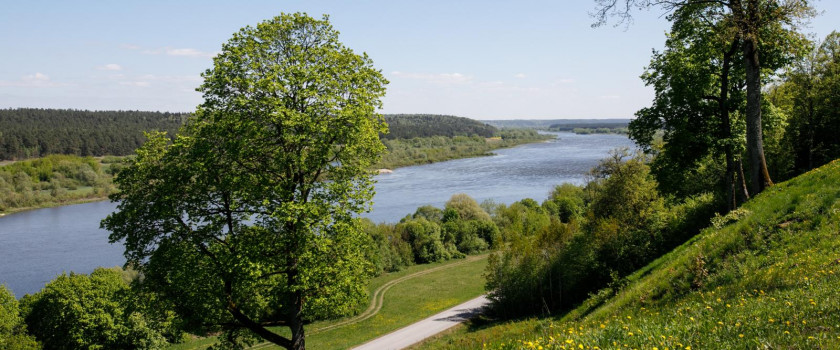
The landscape of the wide, expressive, steep-sided Nemunas valley is different from that of the Nemunas Loops Regional Park or Dzūkija National Park. The wide spaces are framed by high steep slopes, and the slopes contain valuable fragments of the largest defensive line of the Nemunas River from the Crusader period of the 13th to 15th centuries in Lithuania - the Veliuona, Seredžis, and other castle mounds, the castles and churches. The landscape of the lower Nemunas valley is adorned with erosional complexes of slopes and deep lower reaches of small rivers. The abundance of manor houses, a variety of manor parks, the longest and most prominent fragment of the defensive line of the Nemunas in Lithuania, a river - a street. The Nemunas River and its tributaries are important for the spawning and migration of Chondrostoma nasus, Misgurnus fossilis and Salmo salar, the banks and islands of the Nemunas River are important for the breeding period of the globally endangered tern Sterna hirunda and the lesser tern Sterna albifrons, and the grasslands of the Nemunas Valley are important for the breeding period of the Caspian tern (Crexcrex), The Nemunas Valley meadows are important habitats for the spotted sandpiper (Sylvianisoria), common woodpecker (Lanius colurio), the Nemunas Valley hillside is home to a community of prickly plum (Prunus spinosa), the valuable Užnykis forest with the Velniaravis nature reserve protected by the Velniaravis nature reserve is a valuable foraging and breeding site for the Sengir and the black stork (Ciconia nigra) and the golden eagle (Aqiula pomarina).
Landscape
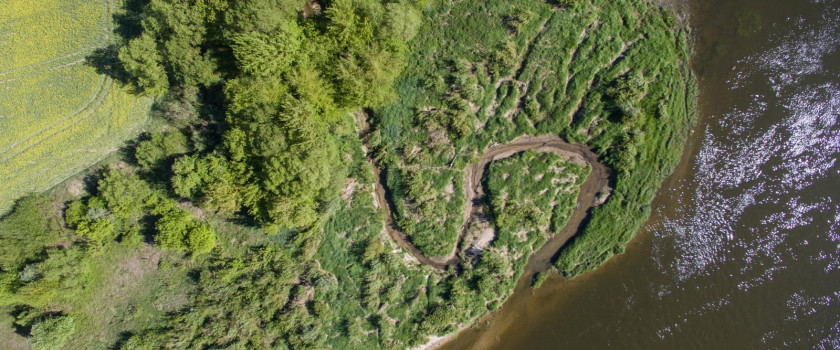
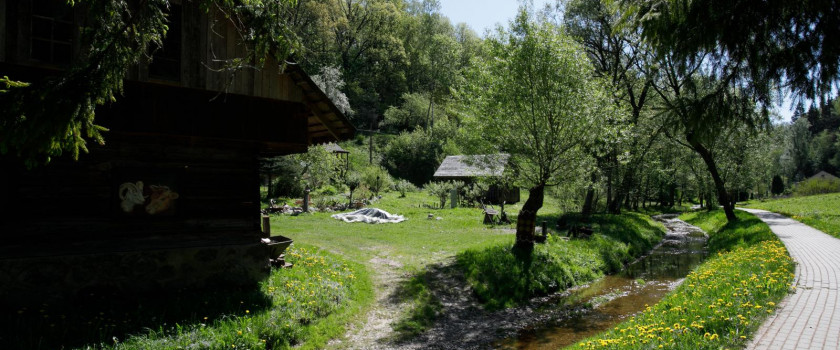
Panemuniai Regional Park is located in a unique hydrographic-morphological structure created by valley erosion and hydrological processes. The steep erosive slopes of the Nemunas are further enhanced by the chains of defensive mounds on both sides of the Nemunas. It is characterised by an abundance of natural and cultural heritage sites and a high recreational and cognitive tourist potential. The wide lower reaches of the Nemunas River (13 % of the area of the Regional Park) and the representative castles built in the modern era have a special place in its identity.
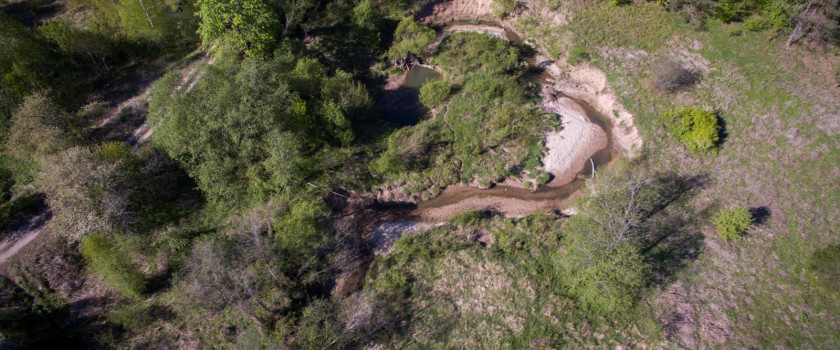
The diversity of the landscape of the Panemuniai Regional Park is created by the following main landscape types: forested and low cultivated broad fluvial valley, cultivated and low urbanised broad fluvial valley, forested and low cultivated deep erosive valley slopes, forested and low cultivated deep gullies and ravines, forested and cultivated fine erosive valleys, natural and cultivated erosional ridges and spurs, wooded sandy fluvioglacial terraces, natural and little cultivated small streams, accumulation river islands, cultivated clayey limnoglacial plains and underwater settlements.
Biodiversity
There is not much natural vegetation in such an urbanised area. Most of it is preserved in areas unsuitable for agriculture, i.e. on slopes and along streams. There are no continuous large forest masses. They are mostly narrow forest strips on the slopes of streams, ravines and the Nemunas. The older forests that have survived are impressive for their large broad-leaved trees. Natural meadows survive in small areas under grazing or hay. There are few such meadows in the park area. The valley-side grasslands are currently no longer mown and are undergoing successional processes. Several rare species of bats, a recorded marsh harrier, otters. Beavers are abundant in the Armenos stream. Both cultivated and natural meadows of the Nemunas are inhabited by shrews and shrikes. Some of Lithuania's most beautiful birds - the chickadee, the gallinule and the bee-eater. River and little terns breed in the territory of the park. They nest only on sandy islets or islets partially covered with grass, and during autumn migration, Great White Egrets can be seen along the Nemunas River, and occasionally, Black Storks. The forests are rich in genic birds - black, green and grey meleths, various species of woodpeckers. The Great Goldfinch, the Black Apollo, the Gentian and the Blood-throated Blue can be found here. Marbled and Dusky Goldfinches have been found.
Reserves, sanctuaries
To preserve the values of natural and cultural heritage, Panemuniai Regional Park has 1 nature reserve and 15 reserves (4 landscape, 6 geomorphological, 4 botanical, 1 botanical-zoological).
The Velniaravis Nature Reserve protects old, mature, old-growth stands close to the hayfields, with a predominance of rare and endangered plant communities, and the largest array of mature bark beetle forests in the Regional Park.
Protected in landscape reserves: The Nemunas - Nemunas lower reaches valley landscape standard with the natural sites near the valley (Plokščiai erosion lagoon, Pupkaimis hill ridge, Obeliškiai, Veliuona, Graužėnai erosion headlands, Veliuona Suffocation Cirque, Didžupis-Vaiguva valleys with Šventduobė spring) and cultural (cultural heritage site - Veliuona town, Veliuona mounds, castle site, Veliuona manor house, Raudone castle complex, Plokščiai (Vaiguviškiai), Kubiliai (Šilavėnai), Stulgiai, Raudonėnai mounds, etc. The Nyka - Nyka and Nykute erosion valley complexes with Misiūnai and Dulinčiškės hillforts, Ilguva Church, communities of rare and endangered plants (hollow-leaved rushes, wood-rush, ivy-leaved lime-trees, wood-rushes, wood-rushes, ground garlic, plum-plum); Castle - Panemunė (Gelgaudai) castle complex; Seredžius - valuable landscape of the confluence of the Nemunas and Dubysa rivers, the street network and spatial structure of the town of Seredžius, the Seredžius hillfort with its ancient settlement, the Seredžius hillfort, the site of the old town and the burial site, and the estate of Belvederis Manor.
Geomorphological reserves protect: Antkalnė - a fan-shaped erosional complex with communities of thorny scrub; Armenos - a deeply folded, heavily eroded erosional complex of the lower Armenos River; Kartupio - a unique elongated Kartupio erosional salagubris; Šilupe - the narrow scarped erosional complex of Šilupe; Tučiai - the steeply grooved slopes of the Nemunas valley; Virangė - the narrow scarped erosional complex of Virangė.
Botanical reserves protect: Dubausio - natural herbaceous communities of open slopes and steppe thermophilic plants with rare species cenopopulations; Gystaus - regionally characteristic communities of river slope deciduous forests, thorny shrubs and herbaceous plants; Klangiai - the highest diversity of thorny scrub in Lithuania with fragments of thermophilous communities; Šilinės - oak forests, pine forests and deciduous stands formed on the gentle slope and in shallow ravines.
The Rečiai botanical-zoological reserve protects floodplain meadow communities typical of the Nemunas River floodplain, the abundance and diversity of broadleaved forest animals, and bird breeding sites.
Heritage objects
The Panemuni Regional Park contains 11 state-protected natural heritage sites. There are 63 immovable objects of cultural heritage in the Regional Park, including 13 cultural monuments.
 Nature Heritage Site
 Visitor centre
 Other natural object
 Cultural heritage object
 Other cultural object
Visitor centre
Other cultural object
Visitor centre
 Exclusive object
 Cognitive, educational trail
 Holiday resort
 View Place
 Camping
Protected areas attract visitors with their natural and cultural values. When visiting a national or regional park, many people want to take away a souvenir or just a good memory. The Protected Areas Product Label has been created to draw the attention of visitors to the products and services produced by local people. It is a stylised ethnographic bird.
The Protected Areas Product Label helps to recognise that a product is organic, authentic, locally produced, respectful of the environment and wildlife, and good for human health.
The label will be awarded primarily to those who live or work in the protected area and whose activities do not damage the protected values. The aim is to stimulate the local economy, to facilitate the living conditions of those living in protected areas, and to encourage partnership between local people and the protected area management.
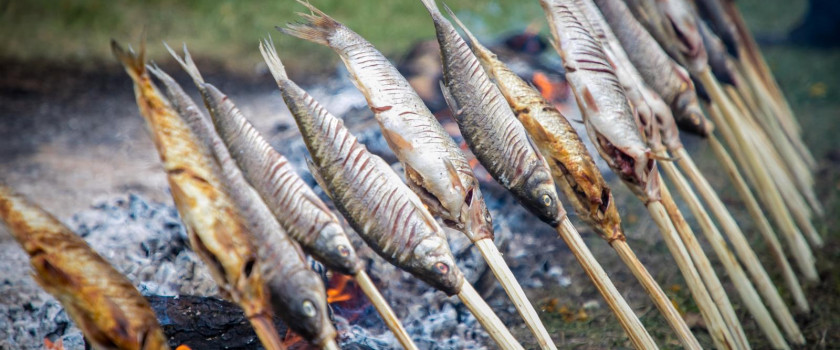
The range of products and services offered by protected areas can be as varied as honey, herbal tea, jams, accommodation, catering, guide services, traditional crafts, etc.
The Protected Areas Product Label is one of the tools for promoting sustainable tourism. It is intended for local producers, craftsmen, tourism service providers and other local people whose activities contribute to the development of sustainable development values in Lithuania's protected areas.
The symbol of the Protected Areas Product Mark (the bird) is common to all Lithuanian protected areas, with only the names of the parks differing. There are 5 national parks and 30 regional parks in Lithuania.
So when you visit Dzūkija National Park, you can buy black pottery made by local craftsmen, and when you visit Rambynas Regional Park, don't forget to buy honey collected by bees in the flooded meadows of the Nemunas River, or herbal tea collected in the forests of Sirveta Regional Park.
The Protected Areas Product Label aims to encourage local people to engage in nature-friendly activities and park visitors to buy unique, authentic, organic products.
Documents for obtaining the ST product label:
ST_prod_zenklo_KOMISIJOS_REGLAMENTAS_21.docx
ST_prod_zenklo_naudojimo_gaires_19.pdf
ST_prod_zenklo_NUOSTATAI_19.docx
Visitor's memo
PERMITTED:
Rest only in designated areas - rest areas, resting places;
camping (pitching tents) only in established campsites;
build fires only in designated fireplaces.
 Nature Heritage Site
 Visitor centre
 Other natural object
 Cultural heritage object
 Other cultural object

 Geological
 Geomorphologic
 Hydrogeological
 Hydrographic
 Botanical
 Zoological
 Nature school
 Visitor centre
 Exclusive object
 Cognitive, educational trail
 Holiday resort
 View Place
 Camping
 Handmade products
 Services
 Food products

