33731 he.
Varniai Regional Park has been established to protect the central Žemaitija region‘s landscape of hills and lakes, as well as other natural and cultural heritage objects:
- The Žemaitija region‘s landscape of hills and lakes featuring the high Medvėgalis, Aukštagiria, Gaudkalnis, Moteraitis and Sprūdė hilltops, distinctive plateau complexes, the Lūkstas, Paršežeris and Stervas Lakes and wetland complexes, and Biržuliai Lake and surrounds which are of great ornithological value;
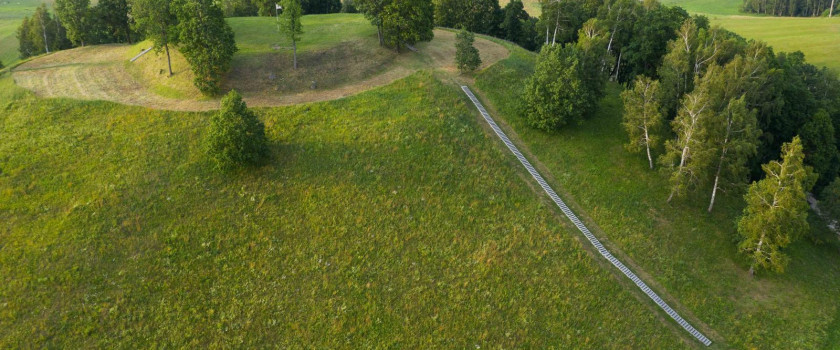
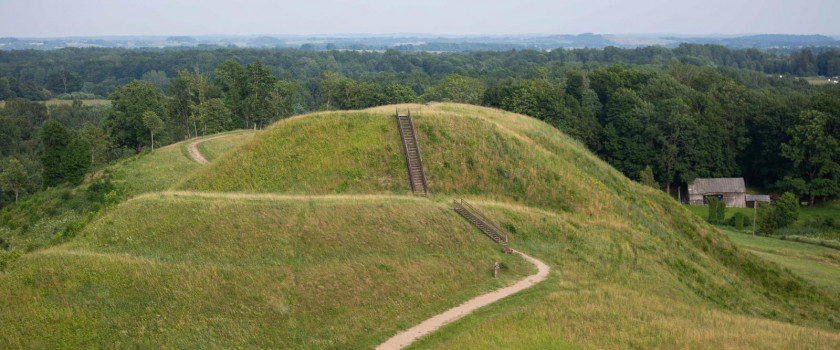
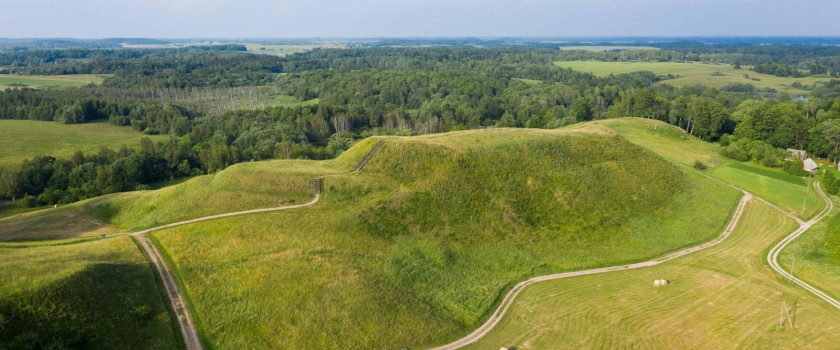
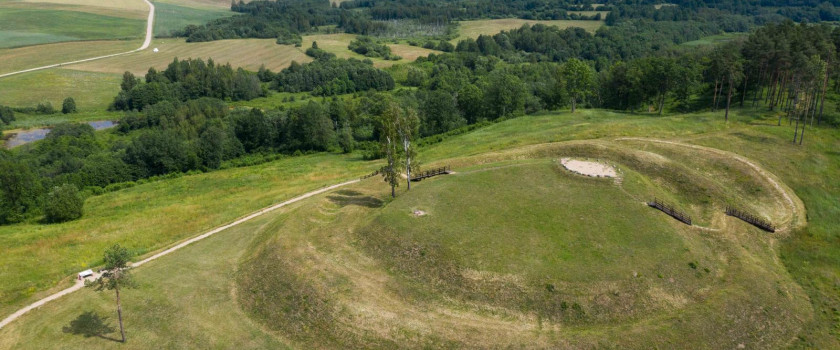
- Cultural heritage values such as the Stone Age Pabiržuliai encampment complex, castle mounds and the Varniai urban complex;
- The stability of the natural ecosystem, its biotic components, characteristic flora and faun and important water bird nesting grounds and migratory rest stops.
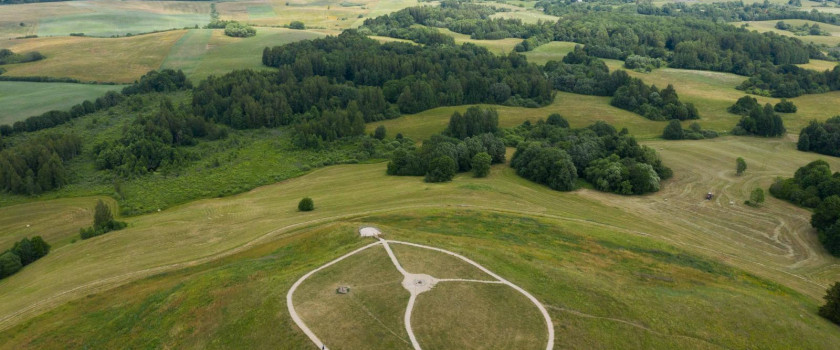
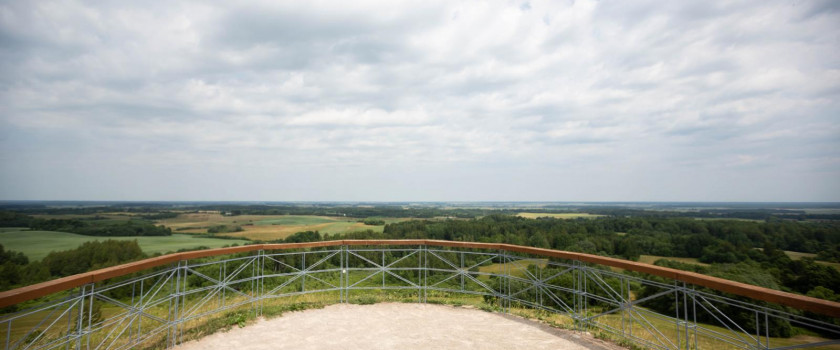
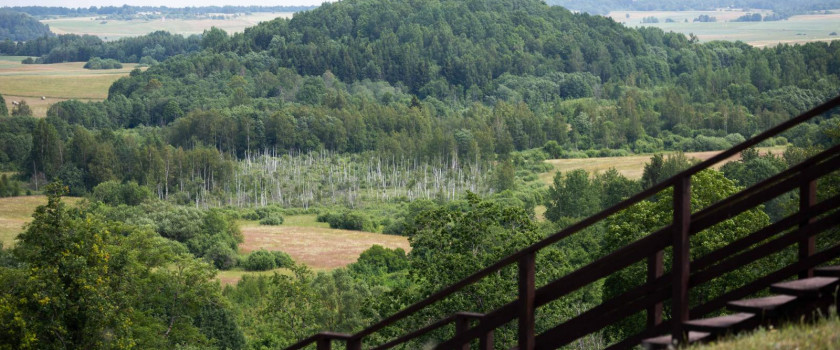
Exceptional feature – abundance of unique values. In the most valuable part of Samogitian hilly area there stand the highest hills – mounds. It is the region where stands the highest hill in Samogitia – Medvėgalis, and the queen of the Lithuanian hills – Šatrija. The largest natural Samogitian lake Lūkstas still occasionally wash out some amber. It is the region where all the major Samogitian rivers start, and the wetlands are among the richest in bird diversity. It is the cradle of the Baltic people with the eldest in Lithuania and one of the eldest known burial sites in Eastern Baltic Rim countries. Sietuva wetlands have the hidden underwater stony road kūlgrinda.
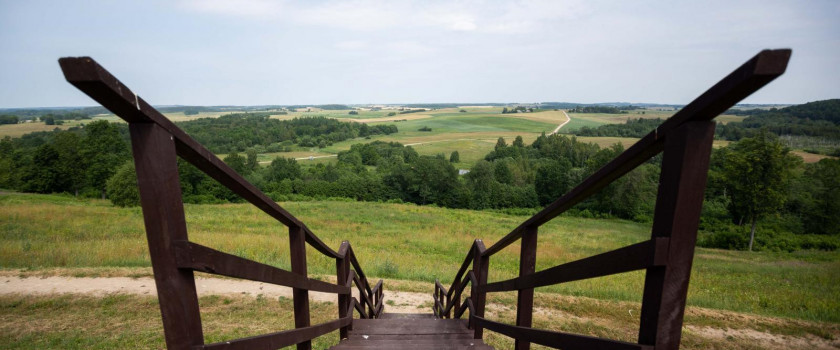
The Varniai Regional Park is situated in the watershed ecosystems of Minija, Venta, Virvyčia, Krąžantė, Akmena and Lokysta upper reaches, and in the most distinctive Samogitian upland the Medvėgalis-Girgždūtė-Šatrija morainic massif with the highest Medvėgalis hill-mound, and one of the major centres of building the Lihuanian statehood – Varniai (former Medininkai). The park is characterised by unique cultural heritage objects and large recreational and tourist potential as well as special historical importance of the cultural heritage objects. Varniai Regional Park is classified under the top category from the perspective of exceptional value of the landscape.
The landscape diversity of the Varniai Regional Park has been formed by the following major landscape types: forested and little cultivated wide tunnel valley lakes, forested swampy laky waterholes, forested and cultivated morainic plateau-like hill massifs, little forested and cultivated glaciofluvial kame and eskers, forested and little cultivated sandy hilly massif, cultivated and little cultivated morainic hill massifs, cultivated and urbanized morainic elevations, forested and cultivated undulating glacio-fluvial elevations, cultivated and little forested glacio-fluvial junctions and kame terraces, forested and cultivated little lakes, forested and little cultivated swampy lakes and landscape developments of various types.
These are the territories of European Community importance (code, title) found in the park: 9160 Sub-Atlantic and medio-European oak or oak-hornbeam forests of the Carpinion betuli, 6230 Species-rich Nardus grasslands, on silicious substrates in mountain areas (and submountain areas in Continental Europe), 6210 Semi-natural dry grasslands and scrubland facies on calcareous substrates (Festuco-Brometalia), 3150 Natural eutrophic lakes with Magnopotamion or Hydrocharition – type vegetation, 3130 Oligotrophic to mesotrophic standing waters with vegetation of the Littorelletea uniflorae and/or of the Isoėto-Nanojuncetea, 6410 Molinia meadows on calcareous, peaty or clayey-silt-laden soils (Molinion caeruleae), 7120 Degraded raised bogs still capable of natural regeneration, 7160 Fennoscandian mineral-rich springs and springfens, 7230 Alkaline fens, 9080 Fennoscandian deciduous Pavandenė Church swamp woods, 91D0 Bog woodland, 6430 Hydrophilous tall herb fringe communities of plains and of the montane to alpine levels, 7140 Transition mires and quaking bogs, 6450 Northern boreal alluvial meadows, 6510 Lowland hay meadows (Alopecurus pratensis, Sanguisorba officinalis), 7110 Active raised bogs.
The total number of plant species is 481 of which 3 are protected by the European Community, and 25 are included in Lithuania’s Red Data Book. The total number of animal species is 739. Mammals – 39, of these 4 are protected by the European Community, and 9 are included into the Lithuania’s Red Data Book. Birds – 178, of these 42 are protected by the European Community, and 46 are included into the Lithuania’s Red Data Book. Fishes – 13. Amphibians and reptiles – 17, of these 2 are protected by the European Community, and 3 are included into the Lithuania’s Red Data Book. Invertebrates – 492, of these 6 is included into the Lithuania’s Red Data Book.
The following reserves have been established in the Varniai Regional Park to protect its natural and cultural values: 1 strict nature reserves and 33 reserves (9 landscape, 9 geomorphological, 4 hydrographical, 1 pedological, 1 botanical, 1 botanical-zoological, 5 telmological, 1 archeological, and 2 urban reserves).
The Stervas Strict Nature Reserve has been established to protect the Stervas Lake with its swampy lakeshore and swampy Tetervinė Forest with the protected plant species (Dactylorhiza incarnata, Dactylorhiza baltica, Dactylorhiza ochroleuca, Platanthera chlorantha) and protected animal species (Mustela erminea, Botaurus stellaris, Lyrurus tetrix Porzana porzana, Porzana parva, Grus grus, Chlidonias niger).
The landscape reserves have been established to protect: Bilioniai – the distinctive landform landscape with the Bilioniai (Švedkalnis) castle mound; Biržuvėnai – the Virvytė River valley landscape, and the Biržuvėnai manor estate; Girgždūtė – one of the most beautiful plateau landscapes in Lithuania, of great natural and cultural value, with typical forest communities; Medvėgalis – the landscape of the highest elevation in the Samogitian watershed hillmassif with the typical forest biocenoses, and the protected plant species (Platanthera chlorantha, Dactylorhiza incarnata, Dactylorhiza baltica), and the protected animal species (Parnassius mnemosyne, Papilio machaon) as well cultural values (the Medvėgalis castle mound with the surrounds and kūlgrinda); Pavandenė – the typical landscape of large individual hills featuring the distinctive Moteraitis, Sprūdė and Knabė Hills, castle mounds and the former Pavandenė manor site, Gludas lake, the protected plant species (Corydalis cava), and the protected animal species (Parnassius mnemosyne, Papilio machaon); Sietuva – the landscape of the old junction laky waterhole landscape with the natural Sietuva stream, lakeshore wetlands, the protected plant species (Iris sibirica, Platanthera chlorantha, Orchis mascula, Dactylorhiza fuchsii, Malaxis monophyllos, Liparis loeselii), and the protected animal species (Haliaeetus albicilla, Parnassius mnemosyne) as well as cultural values (Burbiškiai castle mounds, Sietuva and Dargiai underwater roads – kūlgrindos); Šatrija – the landscape of morainic massifs with the Pašatrija castle mound; Vembūtai – the distinctive landscape of morainic massif and lakeshores with the Vembūtai castle mound; Žąsūgala – the distinctive landscape of morainic massif and erosional valley with Sėbai castle mound and Žąsūgala hill slope, erosional landforms, forest and grassland communities as well as the Picea abies genetic diversity in the Pušinė forest.
The geomorphological reserves have been established to protect: Apvaršuva – the typical small morainic hill massif; Aukštagirė – the relief of individual hills and swampy hollows; Bėkšvė – the distinctive relief of kame chain; Druja – the largest in Varniai Regional Park plateau, and the Gūšra waterhole; Jaušaičiai – the morainic crest that closes off Lūkstas waterhole and shapes the panorama of the area; Kietkalnis – the distinctive Samogitian watershed crest relief with the Kietkalnis and Stromas hilltops; Medvalakis – the ridge with the features of esker typical to the Samogitian watershed; Spingė – the group of morainic plateaus with the distinctive Spingė hilltop; Žiograkalnis – the unique insular Žiograkalnis plateau.
The hydrographical reserves have been established to protect: Lūkstas – the Lūkstas Lake wide gradually-sloping shallows; Minija headwaters – the Minija headwaters with the Didovas, Kliokis, Pluotinalis and Salotas Lakes and junctions; Venta headwaters – the Venta headwaters with the Veniai and Medainis lakes; Virvyčia – the distinctive hydrographic structure of the Virvytė upper reaches.
The Pagirgždūčiai Pedological Reserve has been established to protect the characteristic example of the sod-podzolic loamy soils of the pedological region in the Samogitian upland watershed hills.
Dubulis Botanical Reserve has been established to protect the typical wet meadow and forest communities with the protected plant species – Platanthera chlorantha.
The Biržulis Botanical-Zoological Reserve has been established to protect the ecologically unique and especially important water and wetland bird (Botaurus stellaris, Cygnus Cygnus, Circus pygargus, Porzana porzanai, Porzana parva, Grus grus, Chlidonias niger) nesting and migratory rest stop complex with the habitats of rare and endangered plants (Betula humilis, Iris sibirica, Orchis mascula, Dactylorhiza incarnata) and animals (Mustela erminea, Parnassius mnemosyne).
The telmological reserves have been established to protect: Ankantai – the characteristic complex of swampy forests; Baltežeris – the swampy waterhole complex; Debesnai – the lakeshore swamp with the habitats of the protected plant species (Betula humilis, Pinguicula vulgaris, Iris sibirica, Platanthera chlorantha, Orchis mascula, Dactylorhiza incarnata, Dactylorhiza baltica, Dactylorhiza maculata, Dactylorhiza ochroleuca, Dactylorhiza traunsteineri, Malaxis paludosa, Liparis loeselii, Hamatocaulis vernicosus) and animal species (Botaurus stellaris, Circus pygargus, Porzana porzana, Grus grus, Euphydryas aurinia) as well as cultural values; Kaukliai – the complex of swampy forests; Sydeklis – the typical swampy waterhole with the euthropic lake with the protected plant species (Pinguicula vulgaris, Dactylorhiza baltica, Dactylorhiza maculata, Liparis loeselii) and the protected animal species (Lyrurus tetrix, Grus grus).
Pabiržulis Archaeological Reserve has been established to protect the Stone Age encampments.
The urban reserves have been established to protect: Luokė – the layout and spatial structure of the town Luokė and its cultural value (the place of the old town); Varniai – the Varniai (former Medininkai) layout and spatial structure (the place of Varniai old town, the complex of Varniai St. Apostles Peter and Paul Church).
There are 5 state protected natural heritage objects in the Varniai Regional Park, of these 2 are natural monuments.The most significant includes the following: The Great Rock, the Vokštelis overgrown lake, and Skliausčiai Oak. There are 95 cultural heritage objects in the park.

 Nature Heritage Site
 Visitor centre
 Other natural object
 Cultural heritage object
 Cognitive, educational trail
 Other path, route
 Campsite

 Geological
 Geomorphologic
 Hydrogeological
 Hydrographic
 Botanical
 Zoological
 Nature school
 Visitor centre
 Nature Heritage Site
 Visitor centre
 Other natural object
 Cultural heritage object
 Cognitive, educational trail
 Other path, route
 Campsite

