BDAR

Meteliai Regional Park

54.284, 23.741
How to get?
  • meteliu-regioninis-parkas-5d409de31302d.jpg
  • balinis-vezlys-5d4168d3a3941.jpg
  • meteliu-regioninis-parkas-5d409e258207e.jpg
  • meteliu-regioninis-parkas-5d409dfab24b4.jpg
  • meteliu-regioninis-parkas-5d4097e6c70c5.jpg
  • meteliu-regioninis-parkas-5d40986f2d9f3.jpg
  • meteliu-regioninis-parkas-5d409ba1296c8.jpg
  • meteliu-regioninis-parkas-5d409bb44ee75.jpg
  • meteliu-regioninis-parkas-5d409cb30e5f6.jpg
  • meteliu-regioninis-parkas-5d409dee352d5.jpg
  • meteliu-regioninis-parkas-5d4099c0b89c5.jpg
  • meteliu-regioninis-parkas-5d409d2e4028c.jpg
  • meteliu-regioninis-parkas-5d40995aef4b0.jpg
  • obelijos-ezeras-5d4184919d2a3.jpg

Data

Year of establishment

1992 year

Area

17720 he.

Regional park group


Ph. No.
Email
https://dzukijossuvalkijosstd.lrv.lt/lt/mrp/

Objectives of the establishment

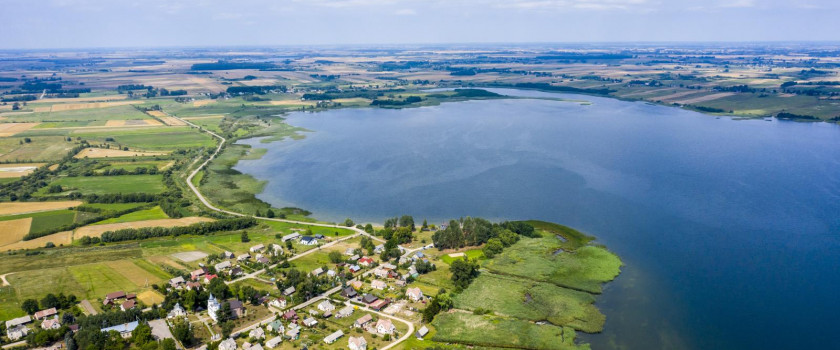
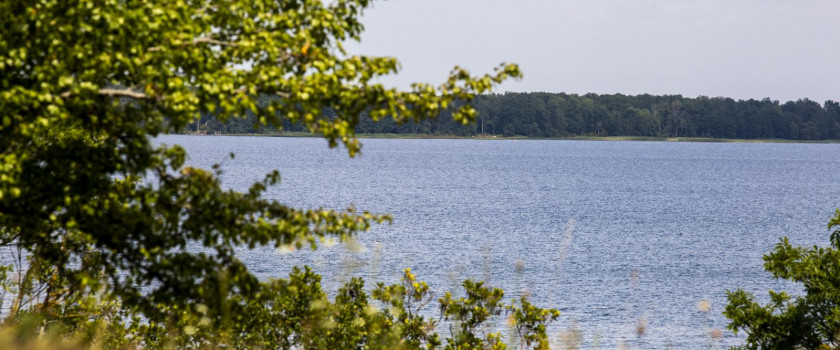
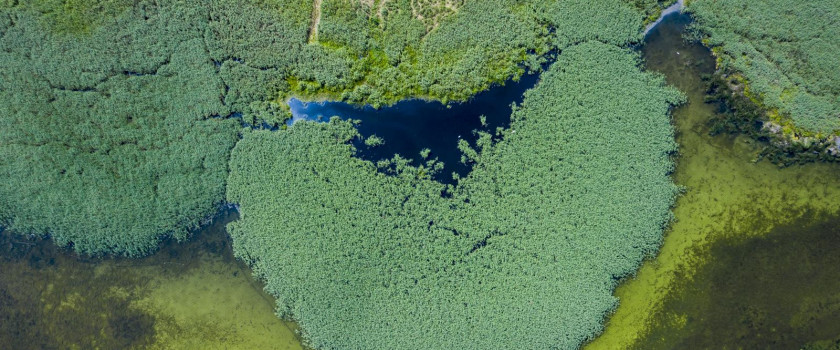
The Meteliai Regional Park has been established to protect the unique great lakes of southern Lithuania (Dusia, Meteliai and Obelija) and their surrounding landscape as well as other natural and cultural heritage values:

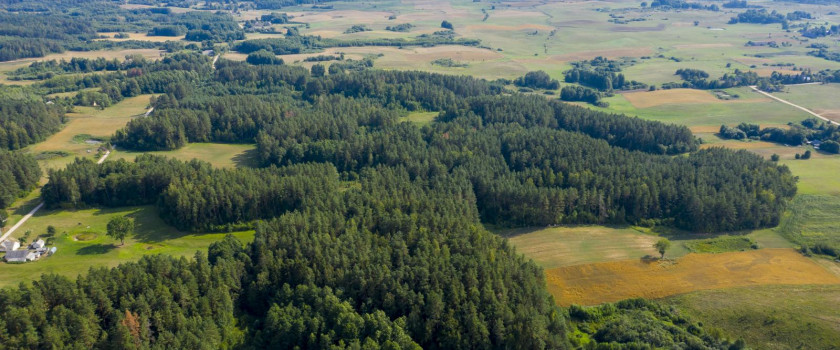
  • The basins of the Great Lakes of Southern Lithuania with the Dusia, Meteliai and Obelija Lakes and their surrounding landscape, the unique Teizai moraine massif with longitudinal hills, and a lateral morraine massif with large plateaus in the Žagariai village;
  • Cultural heritage values: castle mound complexes and street-based villages;
  • The stability of the natural ecosystem, its biotic components, characteristic flora and fauna, important bird nesting and migratory rest-stop sites.

Exceptional value

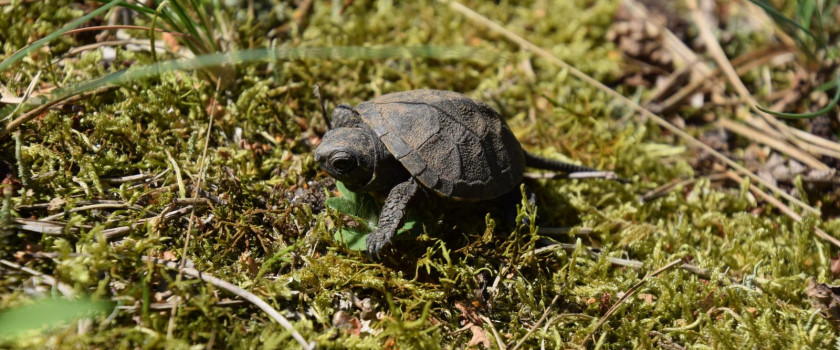
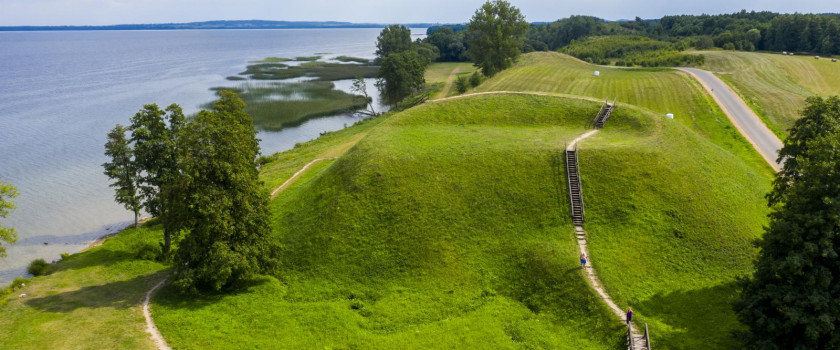
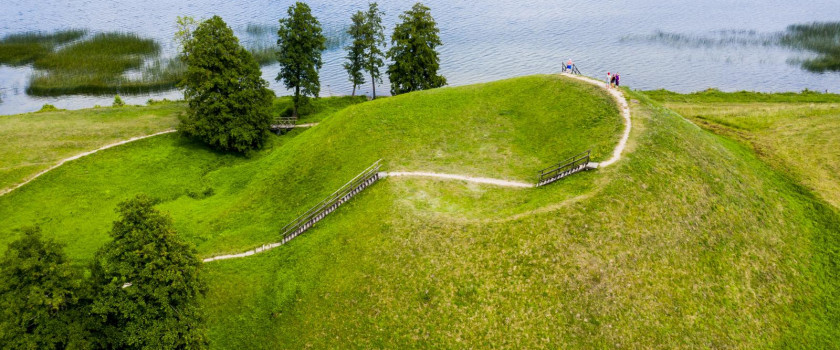
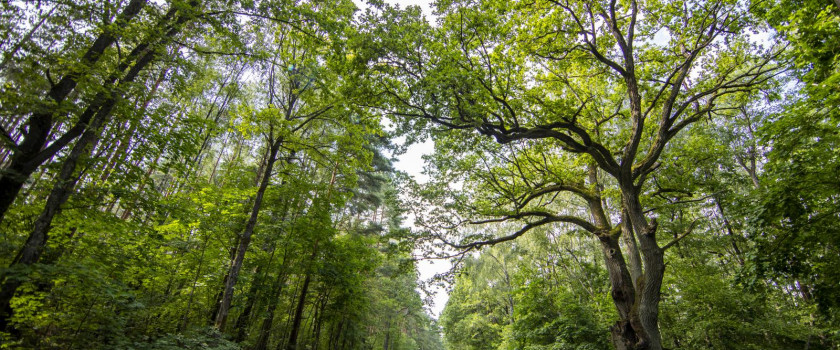
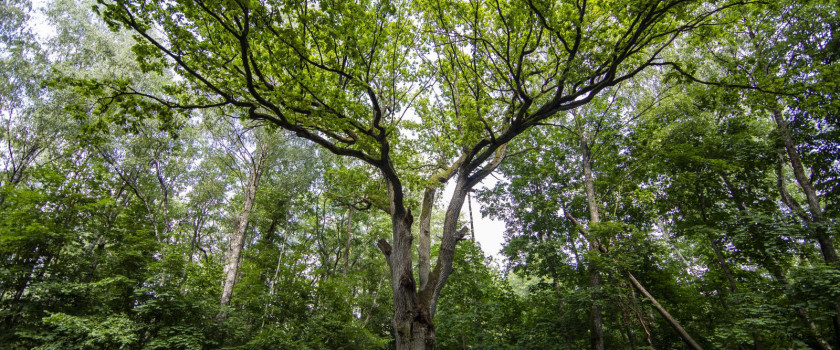
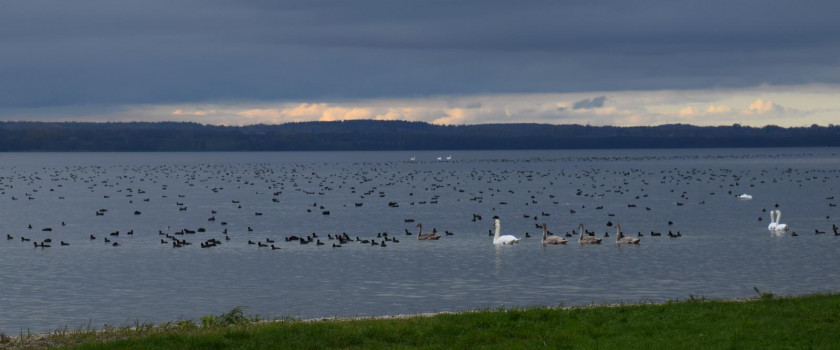
The protected landscape of the basins of the Great Lakes of Southern Lithuania with the lake waters as well as high hills and mounds of Žagariai village. The incredible panoramic views are revealed from the top of the Žagariai hills and the Prelomciškė mound. The region is rich in natural values. Here lives the extreemely rare and protected in Europe pond turtles (Emys orbicularis) Trakas forest is the only place in Lithuania where grows the Sessile Oak (Quercus petraea). The Great Lakes come to life during the autumn bird migrations.

Landscape

The Meteliai Regional Park is situated in the north-western part of Dzūkų Upland in the zone of agrarian little forested lake region and morainic hills’ area characterised by the landscape of cultivated and little cultivated abundant with lakes hand-shaped valley and morainic massif ecosystem in Užnemunė.

The landscape of Meteliai regional park has been formed by the following major landscape types: little cultivated large kettle lakes, forested and cultivated large flat-sloped kettle lake, limnic (lake) terraces, forested glacio-fluvial uplands, glacio-fluvial eskers, little cultivated drumlinized morainic uphills, forested and cultivated morainic uphills, small river valleys, fens and mixed-type wetlands, and fragments of ethno-cultural settlement.


Biological diversity

These are the territories of European Community importance (code, title) found in the park: 3150 Natural eutrophic lakes with Magnopotamion or Hydrocharition -type vegetation, 3160 Natural dystrophic lakes and ponds, 6120 Xeric sand calcareous grasslands, 6210 Semi-natural dry grasslands and scrubland facies on calcareous substrates, 6530 Fennoscandian wooded meadows, 7110 Active raised bogs, 7140 Transition mires and quaking bogs, 9050 Fennoscandian herb-rich forests with Picea abies, 9080 Fennoscandian deciduous swamp woods, 9160 Sub-Atlantic and medio-European oak or oak-hornbeam forests of the Carpinion betuli, 9190 Old acidophilous oak woods with Quercus robur on sandy plains, 91D0 Bog woodland, 91E0 Alluvial forests.

The total number of plant species is 951 of which 5 are protected by the European Community, and 66 are included in Lithuania’s Red Data Book. The total number of animal species is 915. Mammals – 47, of these 2 are protected by the European Community, and 3 are included into the Lithuania’s Red Data Book. Birds – 192, of these 23 are protected by the European Community, and 44 are included into the Lithuania’s Red Data Book. Fishes – 30, of these 3 are protected by the European Community, and 1 is included into the Lithuania’s Red Data Book. Amphibians and reptiles – 16, of these 3 are protected by the European Community, and 3 are included into the Lithuania’s Red Data Book. Invertebrates – 630, of these 4 are protected by the European Community, and 13 are included into the Lithuania’s Red Data Book.

Strict nature reserves, reserves

The following zones have been established in the Meteliai Regional Park to protect its natural and cultural values: 2 strict nature reserves, and 9 reserves – 4 landscape, 1 geomorphological, 1 hydrographical, 1 botanical, 1 zoological, and 1 botanical-zoological reserve.

The strict nature reserves have been established to protect: Obelytė – rare and endangered plant populations, and standard southwest Lithuanian climatic zone flora – Tilio-Carpinetum betuli communities; Trakas – the unique relict Sessile Oak communities, habitats of rare and endangered plants and nesting grounds of the Clanga pomarina. The landscape reserves have been established to protect: Barčiai – the lake terraces, the lakeshore dune belt, small morainic landforms, the slopes of the western shore of the Dusia Lake which are important from a botanical and entomological aspect, Prelomčiškė mound with the settlement, the ancient Zebrėnai settlement as well as other cultural values; Kalniškė – the Dzūkija region‘s morainic hills and lakes landscape with its typical plant complexes found on hills and in the depressions between hills; historical sites of the battles for the freedom; Meteliai – the Meteliai and Obelija Lakes and their surrounding landscape with the beautiful Obelytė valley, the Statiškės and Širvintas forests, the ornithologically significant Karvinė wetland complex, the chalky fens of Maušelis Lake with rare and endangered plant habitats, and abundant and diverse bird fauna; Papėčiai, Obelija, Zaramciškiai mounds, and other values of cultural heritage; Teizai – the unique morainic massif on the southern slope of the Sūduva upland with especially distinctive drumlins, dry grassland communities; Verstaminai and Giraitė mounds, Verstaminai hill of sacrifice, and other values of cultural heritage.

The Žagariai Geomorphological Reserve has been established to protect the distinctive lateral morainic massif with large steep-sloped hills, the single street villages of Žagariai and Nakrūniškė with a set area of land allocated to each household (according to a land reform law dating back to the Great Lithuanian Duchy), their spatial composition and ethnographic architecture.

The Dusia Hydrographical Reserve has been established to protect the largest lake in southern Lithuania with its fish species, large variety of Chara algae, wide sandy shallows along the south-eastern shore, and bird nesting, feeding and pre-migration stageing grounds.

The Rinkotai Botanical Reserve has been established to protect the natural and semi-natural broad-leaved deciduous forest habitats of rare plant species (Cypripedium calceolus, Corydalis cava, Corydalis intermedia, Poa remota, Carex brizoides).

The Juodabalė Zoological Reserve has been established to protect the Pond Turtle population.

The Trakas Botanical-Zoological Reserve has been established to protect the unique Sessile Oak community, the hilly southwest Lithuanian forests and wetlands flora (Linden, Hornbeam, Pine, Fir and Black Alder forests), herbaceous plant communities in transition mires, rare and endangered plant habitats and rare bird nesting grounds.

Heritage objects

There are 2 natural heritage objects in the Meteliai Regional Park (the Great Oak and the Hollowed Širvintas Oak) and 15 cultural heritage objects, of which 7 are cultural monuments.

Visited objects

For visitors

Produkto ženklas

Meteliu RP

Saugomos teritorijos traukia lankytojus savo gamtinėmis ir kultūrinėmis vertybėmis. Dažnas, užsukęs į nacionalinį ar regioninį parką, nori išsivežti suvenyrą ar tiesiog gerą prisiminimą. Siekiant atkreipti lankytojų dėmesį į vietinių gyventojų gaminamus produktus ir teikiamas paslaugas, buvo sukurtas Saugomų teritorijų produkto ženklas. Juo tapo stilizuotas etnografinis paukštis.

Saugomų teritorijų produkto ženklas padeda atpažinti, kad produktas yra ekologiškas, autentiškas, pagamintas vietos gyventojų, nekenkiant aplinkai ir gyvajai gamtai, palankus žmogaus sveikatai.

Ženklo turėtojas pirmiausiai bus tas, kuris gyvena ar veiklą vykdo saugomoje teritorijoje, taip pat savo veikla nepažeidžia saugomų vertybių. Tokiu būdu siekiama skatinti vietos ekonomiką, sudaryti palankesnes sąlygas gyvenantiems saugomose teritorijose, skatinti partnerystę tarp vietos gyventojų ir saugomos teritorijos direkcijos.

Saugomų teritorijų produkto gaminių, paslaugų pasiūla gali būti įvairiausia: tai medus, žolelių arbata, uogienės, tai ir apgyvendinimo, maitinimo, gido paslaugos, tradicinių amatų dirbiniai ir t.t.

Saugomų teritorijų produkto ženklas - viena iš darnaus turizmo skatinimo priemonių. Jis skirtas vietos produktų gamintojams, amatininkams, turizmo paslaugų teikėjams ir kitiems vietos gyventojams, savo veikla prisidedantiems prie darnaus vystymosi vertybių plėtojimo Lietuvos saugomose teritorijose.

Saugomų teritorijų produkto ženklo simbolis (paukštis) yra bendras visoms Lietuvos saugomoms teritorijoms, skiriasi tik parkų pavadinimai. Lietuvoje yra 5 nacionaliniai ir 30 regioninių parkų.

Tad atvykę į Dzūkijos nacionalinį parką, galite įsigyti vietos meistrų sukurtų juodosios keramikos dirbinių, o keliaudami po Rambyno regioninį parką nepamirškite įsigyti medaus, kurį bitutės renka užliejamose Nemuno pievose ar Sirvėtos regioninio parko miškuose surinktos žolelių arbatos.

Saugomų teritorijų produkto ženklu siekiama skatinti vietos gyventojus užsiimti gamtai draugiška veikla, o parkų lankytojus - įsigyti išskirtinių, autentiškų, ekologiškų produktų.

Dokumentai, norint gauti ST produkto ženklą:

ST_prod_zenklo_KOMISIJOS_REGLAMENTAS_16.docx

ST_prod_zenklo_naudojimo_gaires_14.pdf

ST_prod_zenklo_NUOSTATAI_14.docx

ST_prod_zenklo_PARAISKA_14.docx

SUTARTIS_su_partneriu_pvz_14.doc


Lankytojo atmintinė

LEIDŽIAMA:

  • poilsiauti tik tam tikslui įrengtose vietose – poilsiavietėse, atokvėpio vietose;
  • stovyklauti (statyti palapines) tik įrengtose stovyklavietėse;
  • laužus kūrenti tik įrengtose laužavietėse.

PRAŠOME:

  • saugoti aplinką, gamtos bei kultūros vertybes, tausoti gamtos išteklius, nelaužyti medžių, krūmų, neskinti retų augalų, neardyti skruzdėlynų, paukščių lizdų, nebaidyti perinčių paukščių, netrikdyti gyvūnų, nekeisti jų aplinkos;
  • apie pastebėtus gamtos ar kultūros paveldo vertybių niokojimo atvejus ar kitus pažeidimus pranešti policijai, aplinkos apsaugos inspekcijai ar regioninio parko direkcijai;
  • saugiai elgtis su ugnimi – prižiūrėti užkurtą laužą, nepalikti neužgesintų laužų;
  • pastebėjus gaisrą imtis visų galimų priemonių jam likviduoti, o jei tai neįmanoma, nedelsiant pranešti priešgaisrinės apsaugos tarnybai ar regioninio parko direkcijai;
  • nešiukšlinti pakelėse, paežerėse ir kitose vietose, išvykstant palikti poilsiavietę, stovyklavietę tvarkingą, jei yra atliekų rūšiavimo konteineriai, rūšiuoti atliekas pagal instrukcijas;
  • laikytis automobilių važiavimo, stovėjimo miškuose ir paežerėse reikalavimų, statyti transporto priemones tam tikslui įrengtose aikštelėse ir kelių kelkraščiuose, jeigu tai netrukdo saugiam eismui, nėra draudžiamųjų kelio ženklų ir nepažeidžiamos kitų asmenų teisės bei nedaroma žala aplinkai;
  • tausoti statinius, įrenginius lankytojams, pamačius juos niokojančius asmenis apie tai pranešti regioninio parko direkcijai ar policijai;
  • laikytis plaukiojimo vandens telkiniuose taisyklių;
  • uogaujant, grybaujant, žvejojant laikytis Mažųjų miško turtų naudojimo ir Mėgėjiškų žūklės ir žuvų apsaugos taisyklių;
  • nepažeisti kitų gamtos išteklių naudotojų teisių bei interesų, netriukšmauti, garsiai neleisti muzikos ar kitaip trukdyti kitų lankytojų ar vietos gyventojų poilsio, nekelti pavojaus kitų asmenų saugumui;
  • iškilus įvairiems klausimams kreiptis į regioninio parko direkcijai.

NELEIDŽIAMA:

  • lankytis telmologiniuose, zoologiniuose (teriologiniuose, herpetologiniuose, entomologiniuose, ornitologiniuose) draustiniuose nuo balandžio 1 d. iki rugsėjo 1 d., išskyrus bendro naudojimo kelius bei dirbamus laukus;
  • leisti bėgioti palaidiems šunims, maudyti juos paplūdimiuose ar kitose žmonių susitelkimo vietose;
  • užkasti šiukšles ir atliekas;
  • surinktus (sugrėbtus) augalus, jų dalis ar krūvas deginti miške, aukštapelkėse, durpingose vietose ar vietovėse, esančiose arčiau kaip 50 metrų nuo miško, aukštapelkės ar durpingos vietos, taip pat miestuose ir miesteliuose (išskyrus laužų kūrenimą, laužų kūrenimui nustatytose vietose);
  • ardyti, gadinti šlaitus ar kitaip skatinti žemės paviršiaus eroziją;
  • savavališkai įrengti sūpuokles, kitus poilsio ar sporto įrenginius tam neskirtose vietose.

Direkcijos teikiamos paslaugos

Pažintinės kelionės (ekskursijos) ar žygio vadovo (gido) paslaugos:  
lietuvių kalba, 1 val./grupei 12,00 €
užsienio kalba, 1 val./grupei 14,00 €
Pažintinės kelionės pėsčiomis, dviračiais, valtimis, kitomis plaukiojimo priemonėmis organizavimas:  
su kelionės vadovu - direkcijos specialistu ir direkcijos inventoriumi  
1 valandai 12,00€ - 14,00€
Edukacinė paslauga – teminės mokomosios programos organizavimas  
grupei 24,00€ - 36,00€
Naudojimosi poilsiaviete paslauga  
1 valandai 3,00 €
1 parai 30,00 €


Daugiau informacijos Metelių regioninio parko internetinėje svetainėje.

Product brand

Meteliu RP

Protected areas attract visitors with their natural and cultural values. Often, when visiting a national or regional park, they want to take out a souvenir or just a good memory. In order to draw visitor‘s attention to the products and services produced by the local population, a product label for Protected areas has been created. A stylized ethnographic bird was chosen as a brand for Protected Areas.

The product label of Protected areas helps to recognize that the product is organic, authentic, produced by the local people, without harming the environment and wildlife, and favorable to human health.

The holder of the mark will primarily be the person who resides or operates in the protected area and does not violate protected values through his activities. The aim is to stimulate the local economy, facilitate the living in protected areas, and promote partnership between the local people and the management of protected area.

The list of products and services offered by protected areas can be various: honey, herbal tea, jams, accommodation, catering, guide services, traditional handicrafts, etc.

The product label of protected areas is one of the measures to promote sustainable tourism. It is intended for local producers, craftsmen, tourism service providers and other local residents, who contribute to the sustainable development of tourism in Lithuanian protected areas through their activities.

The product mark symbol (bird) of Protected areas is common to all protected areas of Lithuania, only the names of parks differ. There are 5 national and 30 regional parks in Lithuania.

So when you arrive at Dzūkija National Park, you can purchase black pottery created by local masters, and when traveling around Rambynas Regional Park, don't forget to buy honey collected by bees on the flooded meadows of Nemunas or a herbal tea collected in the forests of Sirvėta Regional Park.

The Protected Areas product label aims to encourage local people to engage in nature-friendly activities and park visitors- to purchase exclusive, authentic, ecological products.

Visitor memo

full_html

Services provided by the Directorate

Guided tour (tour) or tour lead (guide) services:  
lithuanian language, 1 hour for group 12,00 €
foreign language, 1 hour for group 14,00 €
Organization of guided trip by foot, bicycle, boat or other means of transport:  
with the travel guide - a specialist and inventory from the directorate  
1 hour 12,00€ - 14,00€
Educational service - organization of a thematic training program  
for a group 24,00€ - 36,00€
Resort service  
1 hour 3,00 €
1 day 30,00 €