BDAR

Nemunas Loops Regional Park

54.608, 24.026
How to get?
  • didziosios-nemuno-kilpos-5cc71c98706e7.jpg
  • didziosios-nemuno-kilpos-5cc7215a30fcc.jpg
  • prienu-silas-2.jpg
  • paverkniu-piliakalnis-5cc7202eb0b92.jpg
  • auksciausias-lietuvos-medis-degsnes-maumedis-5cc16de6c2ce9.jpg
  • babroniu-piliakalnis-5cc7208c9ab7c.jpg
  • birstono-piliakalnis-5cc16d2848be3.jpg
  • balbieriskio-atodanga-5cc16c76f1686.jpg
  • nemajunu-sv-apastalu-petro-ir-povilo-baznycia-5cc16e3e8abd5.jpg
  • prienu-kristaus-apsireiskimo-baznycia-5cc16e51e4e49.jpg
  • auksciausias-lietuvos-medis-degsnes-maumedis-5cc16de304ba7.jpg
  • NKRP LC  _9121.JPG
  • NKRP LC IMG_1847.jpg

Data

Year of establishment

1992 year

Area

25080 he.

Regional park group


Ph. No.
Email
https://dzukijossuvalkijosstd.lrv.lt/lt/nkrp/

Objectives of the establishment

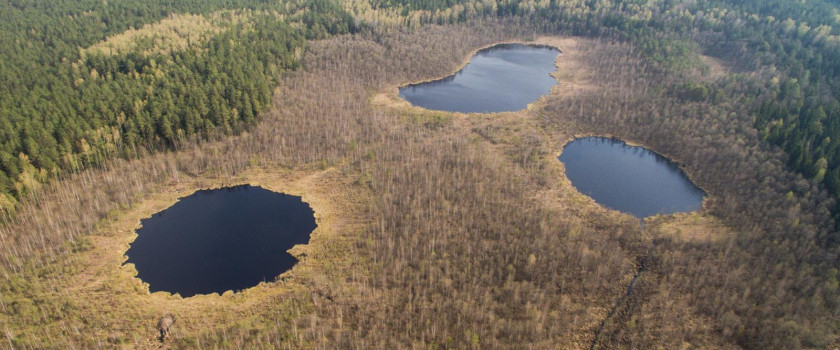
The Nemunas Loops Regional Park has been established to protect the unique landscape of the great Nemunas loops and the Punia pine forest, its natural ecosystem as well as other natural and cultural heritage values.

  • The Great Nemunas Loops system around Punia, Balbieriškiai, Prienai and Birštonas, with natural stream valley strucutres such as erosional remnants, waterholes, boulder exposures, the early Lithuanian pine forests of Punia and Prienai with their valuable biotic communities and the unique Degsnė larch forest;
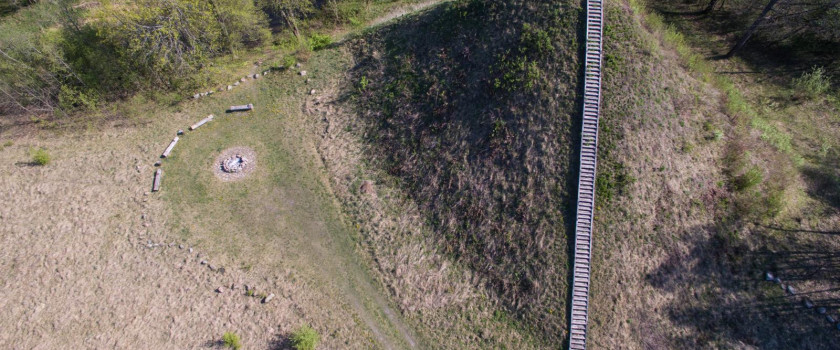
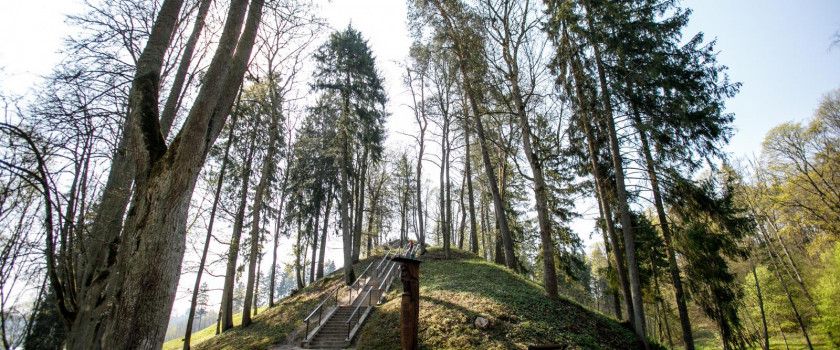
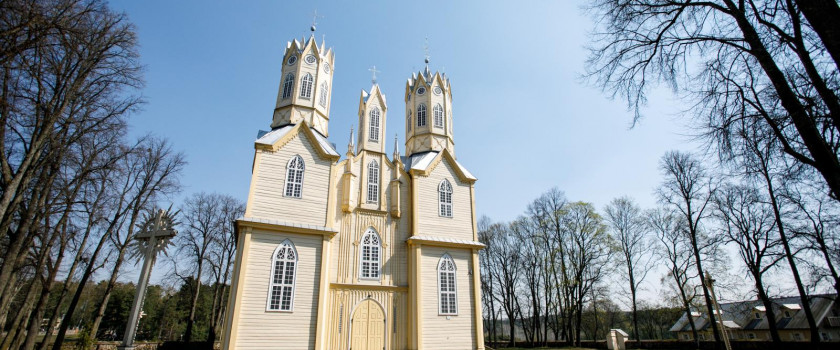
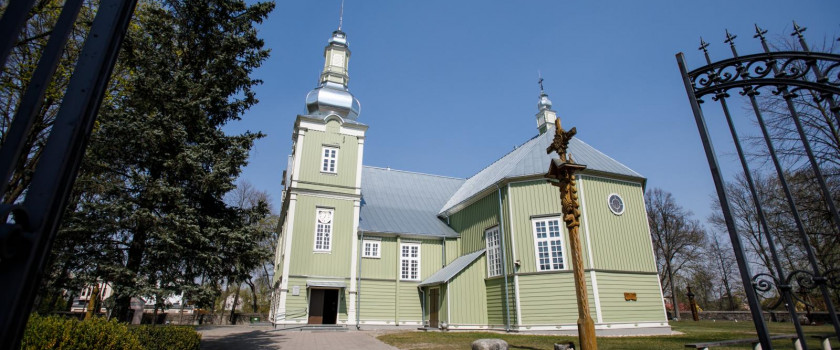
  • The Punia castle mound, the remains of ancient settlements and the Pelekonys-Dambrava castle mounds complexes, the resort of Birštonas and the Nemajūnai urban complexes, the Naravai and Siponys village landscape complexes and other cultural heritage values;
  • The stability of the natural ecosystem, its biotic components, characteristic flora and fauna and natural fish migration routes and spawning grounds.

Exceptional value

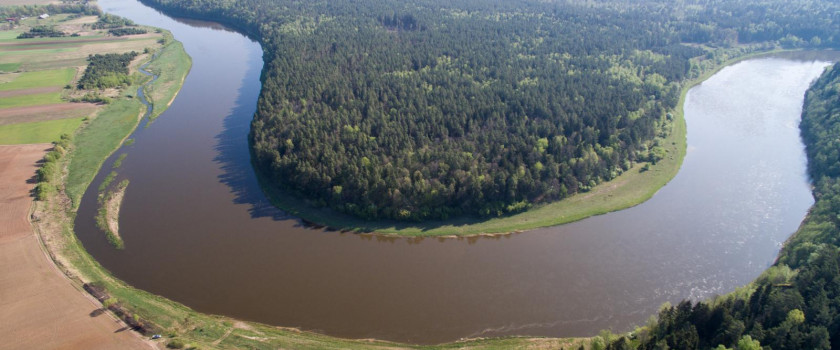
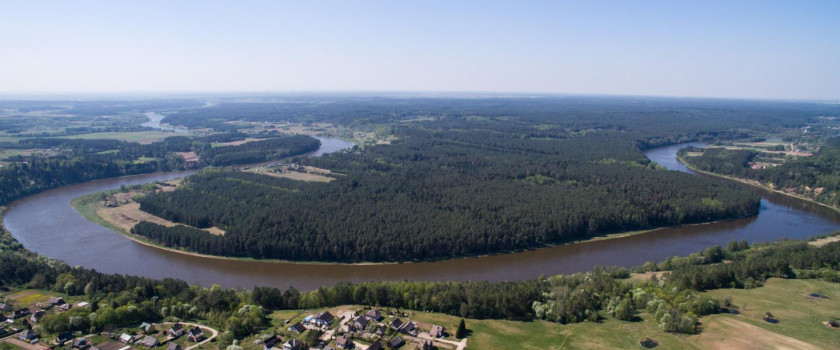
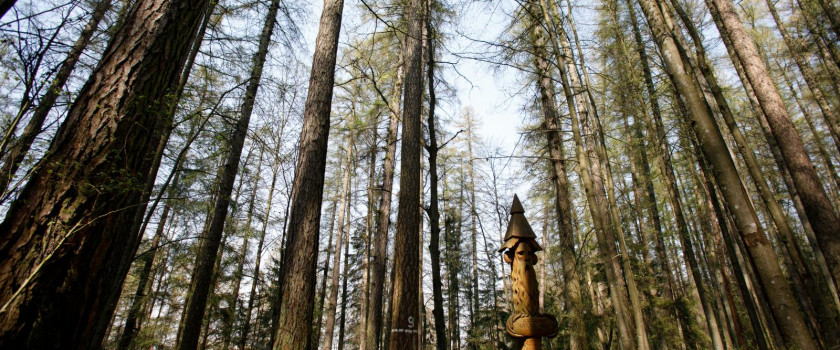
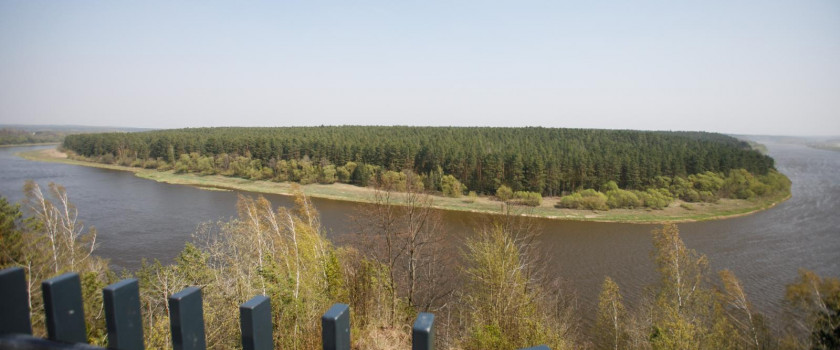
The Great Nemunas Loops is a geological-hydrographical phenomenon, unique not only in Lithuania but also in Europe. The exclusive Nemunas River valley is decorated with plenty of steep exposures, slopes, ravines, and washes. There are new islands still formed in Nemunas. In the valley, there is a unique Škėvonys ridge, erosional remnants, and hollows. An incredibly beautiful Verknė River valley. The Great Loops surrounds the stands of the old forests. The early Lithuanian pine forests of Punia with its characteristic features is well known far outside the borders of Lithuania. The forests of Punia and Prienai features the highest trees in Lithuania. The area also features the Degsnė larch tree forest. Nemunas valley is rich in mounds. This national park has one of the most distinctive landscape structures in Lithuania.

Landscape

Nemunas Loops Regional Park landscape is dominated by unique hydrographical-morphological structure by the valley erosional and hydrological processes, where the difference in altitude reaches up to 50-60 metres, and the distinctiveness of the steep erosional slopes of the Nemunas River slopes was increased still more by the entire chain of defensive mounds. The Park is characterised by various sites and complexes of natural and cultural heritage, and also especially large recreational and educational tourist potential. The Nemunas River makes the following loops especially important for the identity of the landscape: 4 major loops (Punia, Balbieriškis, Prienai, Birštonas), and 2 minor loops (Kernuvės, Kalviai).

The diversity of the Nemunas Loops Regional Park is created by the following major landscape types: forested and and cultivated and urbanized meandering terraced valley, forested sandy glacio-fluvial terraces and Holocene dunes, distinctive forested and little cultivated erosional valley slopes, forested and cultivated small erosional valleys and deep erosional valleys, natural and cultivated erosional remnants and ridges, natural and little cultivated small river valleys, forested sandy undulating elevations, forested Holocene dunes, cultivated loamy-clayey undulating morainic elevations and resort town settlements.

Reserves

The following zones have been established in the Nemunas Loops Regional Park to protect its natural and cultural heritage values: 1 strict nature reserve and 20 reserves (8 landscape, 3 hydrographical, 2 geomorphological, 2 botanical, 2 genetical, 1 telmological, 1 archeological and 1 urban).

The Punia Pine Forest Strict Nature Reserve has been established to protect the nature landscape of Punia pine forest with the features of early Lithuanian pine forests as well as abundant species of protected animal, plant and fungi and their natural habitats.

The landscape reserves have been established to protect: Kalviai – the forested Kalviai erosional remnant landscape with typical dry slope and forest edge communities; Naravai village – the impressive Naravai loops landscape, with its unique urban and land use structure reflecting three historical periods, and its archaeological and memorial values; Nemajūnai – single-homestead village settlement system; archeological, architectural and memorial values; Prienai Pine Forest – reference landscape of forested post-glacial river plain landscape with remaining fragments of old forests, the natural Vadė Stream, the Revuona tributaries wetland complex, and habitats of protected plant species, especially Eriophorum gracile, Cladium mariscus and Hamatocaulis vernicosus; Punia Pine Forest – the expressive forested landscape of the steep banks of the Nemunas River, the Panemuninkai Cliff, the oaks of Punia heath, habitats of protected plant species, cultural heritage values; Punia – the impressive steep slopes of the Nemunas and Punelė Rivers with one of the most famous and largest castle mounds in Lithuania – Punia castle mound, and the Punia church architectural complex; Siponys village – the distinctive agrarian valley landscape that has retained a historical construction style, the traditional architecture of the Siponys and Šaltinėnai villages and the natural habitats of the steep slopes of the Nemunas River; Verknė – the distinctive valley landscape of the lower reaches of the Verknė River with its developed hydrographical structure, castle mounds, boulder exposures and erosional cirques.

The hydrographical reserves have been established to protect: Great Nemunas loops – the hydrographical structure of the Great Nemunas Loops (near Punia, Balbieriškiai, Prienai and Birštonas), unique in the whole glacial landformregion for both their size and character; Ošvenčia –the original dual hydrographical structure of the Ošvenčia Stream with its distinctive erosional gully; Vizdija – the natural Vidzija Stream and valley.

The geomorphological reserves have been established to protect: Daukantai – the geomorphologically unique Nibriai erosional remnant, the distinctive Daukantai erosional basin, the steep-sloped Jieznelė valley and the main slopes of the Nemunas River etched with ravines and gullies; Škėvonys – the unique Škėvonys mound created by valley erosion, and its surrounds, as well as the distinctive Birštonas erosional remnant.

The botanical reserves have been established to protect: Drubengiai – deep valey of the springy Drubengis River with natural habitats of the protected plant, animal and fungus species, especially Arthonia leucopellaea, Menegazzia terebrata, Orobanche reticulata; Degsnė – the unique mature and introduced Degsnė larch forest, and genetic tree fund of European larch in the Degsnė forest.

The Punia Pine Forest Pine Genetic Reserve has been established to protect the genetic diversity of the Pinus sylvestris population. The Punia Pine Forest Spruce Genetic Reserve is used to protect the genetic diversity of the Picea abise population.

The Tartokas Telmological Reserve has been established to protect natural alkaline fen.

The Pelekonys Archeological Reserve has been established to protect the Pelekonys mound complex and the surrounds.

The Birštonas Urban Reserve has been established to protect the characteristic historical part of a small resort town with its urban structure (layout, spatial, volumetric) with the buildings of old villas and other historical buildings, the traditional architectural expression of these buildings and the surrounds, Birštonas Vytautas Park and the mound with the settlement.

Biological diversity

EU NATURA 2000 habitats and species: 2330 Inland dunes with open Corynephorus and Agrostis grasslands, 3150 Natural eutrophic lakes with Magnopotamion or Hydrocharition - type vegetation, 3260 Water courses of plain to montane levels with the Ranunculion fluitantis and Callitricho-Batrachion vegetation, 3270 Rivers with muddy banks with Chenopodion rubri p.p. and Bidention p.p. vegetation, 6210 Semi-natural dry grasslands and scrubland facies on calcareous , substrates(Festuco-Brometalia), 6270 Fennoscandian lowland species-rich dry to mesic grasslands, 6430 Hydrophilous tall herb fringe communities of plains and of the montane to alpine levels, 6450 Northern boreal alluvial meadows, 6510 Lowland hay meadows (Alopecurus pratensis, Sanguisorba officinalis), 7140 Transition mires and quaking bogs, 7160 Fennoscandian mineral-rich springs and springfens, 7210 Calcareous fens with Cladium mariscus and species of the Caricion davallianae7230 Alkaline fens, 8220 Siliceous rocky slopes with chasmophytic vegetation, 9010 Western Taïga, 9020 Fennoscandian hemiboreal natural old broad-leaved deciduous forests (Quercus, Tilia, Acer, Fraxinus or Ulmus) rich in epiphytes, 9050 Fennoscandian herb-rich forests with Picea abies, 9070 Fennoscandian wooded pastures, 9080 Fennoscandian deciduous swamp woods, 9160 Sub-Atlantic and medio-European oak or oakhornbeam forests of the Carpinion betuli, 9180 Tilio-Acerion forests of slopes, screes and ravines, 91D0 Bog woodland, 91E0 Alluvial forests with Alnus glutinosa and Fraxinus excelsior (Alno-Padion, Alnion incanae, Salicion albae); Rhodeus sericeus amarus, Cobitis taenia, Aspius aspius, Lutra lutra, Barbastella barbastellus, Oxyporus mannerheimii, Osmoderma eremita, Cucujus cinnaberinus, Bombina bombina, Triturus cristatus, Boros schneideri, Ophiogomphus cecilia, Cypripedium calceolus, Pulsatilla patens, Dicranum viride, Drepanocladus vernicosus; Sterna Hirundo, Sterna albifrons.


State Protected Objects

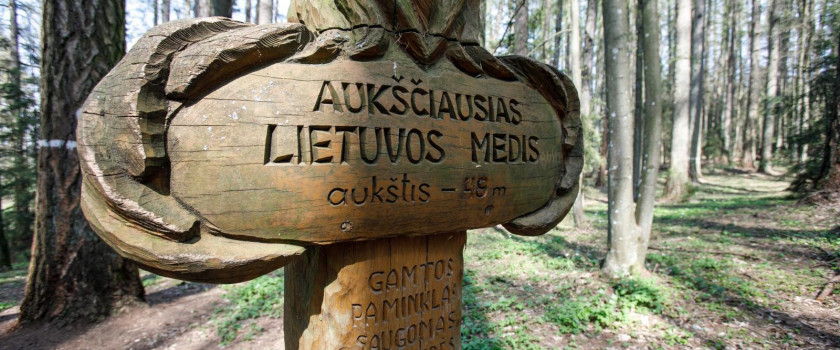
There are 10 state protected objects of natural heritage in the Nemunas Loops Regional Park: Balbieriškis, Siponys and Škėvonys outcropes, Panemuninkai scarp, Verknė exposure Goat furnace, Balbieriškis founts, Punia pine forest pine, the Thick oak, Punia pine forest oaks, Degsnė forest larch (the highest tree in Lithuania).


Visited objects

For visitors

Product brand

Nemuno kilpu RP

Protected areas attract visitors with their natural and cultural values. Often, when visiting a national or regional park, they want to take out a souvenir or just a good memory. In order to draw visitor‘s attention to the products and services produced by the local population, a product label for Protected areas has been created. A stylized ethnographic bird was chosen as a brand for Protected Areas.

The product label of Protected areas helps to recognize that the product is organic, authentic, produced by the local people, without harming the environment and wildlife, and favorable to human health.

The holder of the mark will primarily be the person who resides or operates in the protected area and does not violate protected values through his activities. The aim is to stimulate the local economy, facilitate the living in protected areas, and promote partnership between the local people and the management of protected area.

The list of products and services offered by protected areas can be various: honey, herbal tea, jams, accommodation, catering, guide services, traditional handicrafts, etc.

The product label of protected areas is one of the measures to promote sustainable tourism. It is intended for local producers, craftsmen, tourism service providers and other local residents, who contribute to the sustainable development of tourism in Lithuanian protected areas through their activities.

The product mark symbol (bird) of Protected areas is common to all protected areas of Lithuania, only the names of parks differ. There are 5 national and 30 regional parks in Lithuania.

So when you arrive at Dzūkija National Park, you can purchase black pottery created by local masters, and when traveling around Nemunas Loops Regional Park, don't forget to buy honey collected by bees on the flooded meadows of Nemunas or a herbal tea collected in the forests of Sirvėta Regional Park.

The Protected Areas product label aims to encourage local people to engage in nature-friendly activities and park visitors- to purchase exclusive, authentic, ecological products.

Visitor memo

IT IS PERMITTED:

  • to rest only in places equipped for this purpose – recreation areas, rest areas;
  • to camp (put up tents) only in equipped campsites;
  • to light fires only in equipped camp sites.

WE ASK:

  • to protect the environment, natural and cultural values, conserve natural resources, do not break trees, bushes, collect rare plants, destroy anthills, bird nests, scare nesting birds, disturb animals, do not change their environment;
  • to report any observed cases of destruction of natural or cultural heritage values ​​or other violations to the police, environmental protection inspectorate or regional park directorate;
  • to behave safely with fire – to supervise a lit fire, do not leave unextinguished fires;
  • upon noticing a fire, take all possible measures to eliminate it, and if this is not possible, immediately notify the fire protection service or regional park directorate;
  • not litter on roadsides, lakeside and other places, leave the recreation area, campsite tidy when leaving, if there are waste sorting containers, sort waste according to instructions;
  • comply with the requirements for driving and parking in forests and lakeside areas, park vehicles in designated areas and on roadsides, if this does not interfere with safe traffic, there are no prohibitory road signs and does not violate the rights of other persons and does not cause damage to the environment;
  • preserve structures and facilities for visitors, and if you see people destroying them, report this to the regional park directorate or the police;
  • comply with the rules for swimming in water bodies;
  • when picking berries, mushrooms, fishing, comply with the Rules for the Use of Small Forest Resources and the Rules for the Protection of Amateur Fishing and Fish;
  • do not violate the rights and interests of other users of natural resources, do not make noise, play loud music or otherwise interfere with the rest of other visitors or local residents, do not endanger the safety of other persons;
  • to contact the directorate of the protected area if you have any questions.

IT IS NOT ALLOWED:

  • to let loose dogs run, to bathe them on beaches or other places where people gather;
  • to bury garbage and waste;
  • to burn dry grass, reeds, fallen tree leaves, household waste;
  • to destroy, damage slopes or otherwise promote soil erosion;
  • to install swings, other recreational or sports facilities without permission.