11266 he.
In 1960, the Čepkeliai Botanical-Zoological Reserve was es tablished in Čepkeliai Raised Bog, which later was expanded establishing the Čepkeliai State Strict Nature Reserve in 1975. The Čepkeliai State Strict Reserve was established in order to protect the Čepkeliai wetland – the country’s largest raised bog formed in the watershed of the Katra, Ūla and Grūda Rivers with relict eutrophic lakes and islands, remains of continental dunes and forests surrounding the wetland at the edge of a sandy plain (Dainava), as well as the typical and rare flora and fauna. The Čepkeliai Raised Bog has been included in the list of sites protected under the Ramsar Convention. The strict reserve has also became a part of the European network of the protected areas Natura 2000. The territory of this strict nature reserve has been approved as a Territory important for bird protection and included into the List of the Potential territories important for habitat protection.
Exceptional value
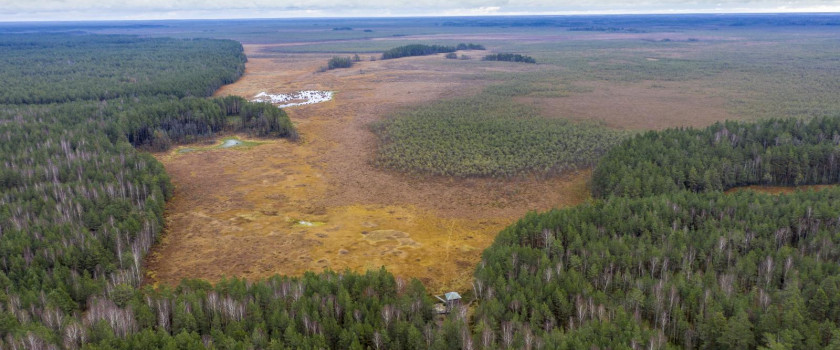
Čepkeliai is the largest wetland in Lithuania. It is rich in relictious lakes, sand islands, and islets - remnants of continental dunes. The high bog is surrounded by forest-covered continental dunes. A distinctive feature is the wilderness of nature: many natural habitats, plants and animals that have chosen swamps and sand dunes as their home. Čepkeliai have long been known for their cranberry bushes. There are many shaky pines here - relics of ancient beekeeping. Čepkeliai are important to the world - they are a wetland of international significance, a very important European wildlife area.
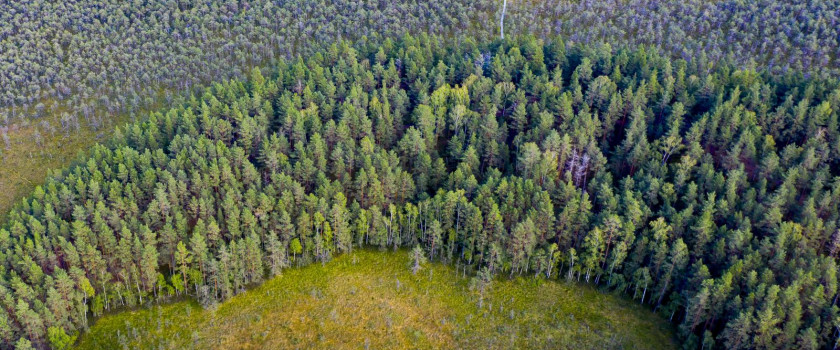
The Čepkeliai Rai sed Bog cover the major part of the strict reserve area, and with the area of 5,858 ha it is the country’s largest raised bog. The wetland extends for over 14 km from east to the west. Pine and juniper-covered continental dunes surround the north and west edge of this wetland, while in the south it is separated from Belarus by the marshy Katra River valley.
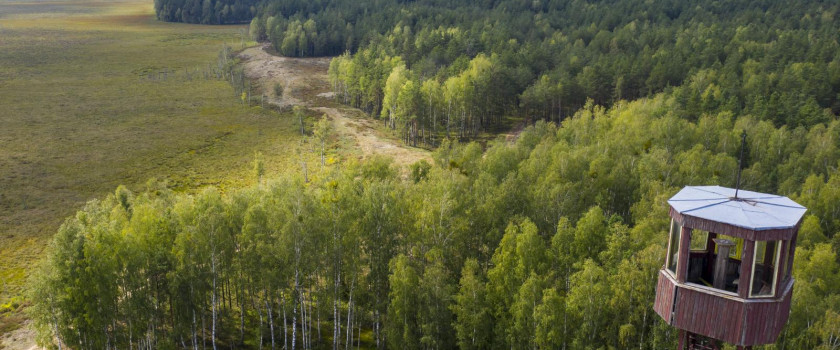
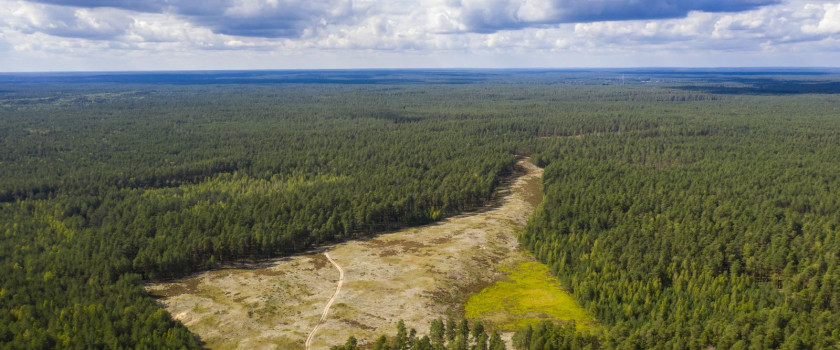
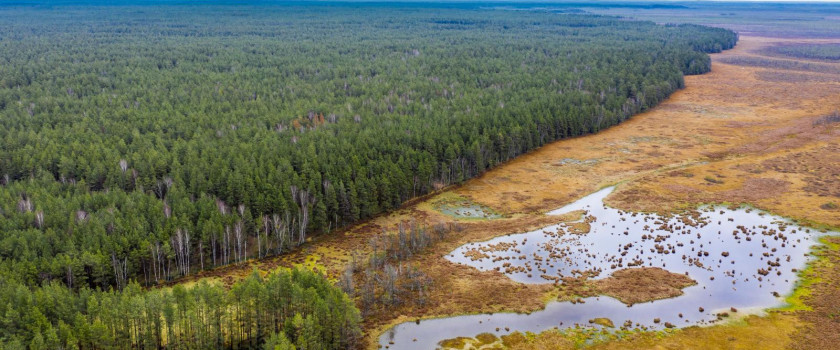
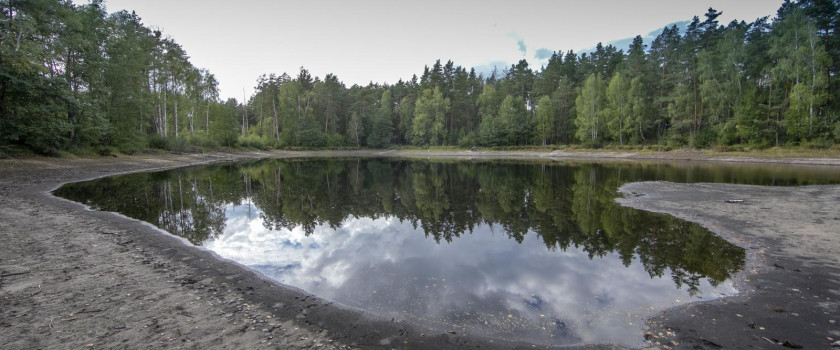
The wetland stretches across the site of former lagoon that existed here towards the end of the last glacial period around 15,000 years ago. In the shallowest areas of the sinking lagoon, the drifting dunes were exposed. The continental dunes currently surround the bog forest from the western and the north-western side. After the lagoon has dried up approx. 10,000 years ago, large lakes formed in the territory of the present Čepkeliai Raised Bog. These lakes have eventually eutrophied. With thickening of the turf layer, the mires were combined into one large wetland. Thus, the Čepkeliai Raised Bog developed. More intense peat formation in the mire occurred 8,000-3,000 years ago. The peat layer which has formed over thousands of years reaches 6.5 m. The north-eastern and eastern edges of the wetland are very sinuous, while in the centre and along the southern edge, there are many islands of mineralised soil of varying sizes overgrown with old tree massifs. These are protruding crests of the continental dunes. The excesive water from the Čepkeliai wetland flow to different directions: to Ūla via Pekla Stream, to Grūda via Musteika Stream, and to Katra via a channel. Lakelets have formed at the eastern end of the raised bog. The largest is called Ešerinis and covers 14.5 ha. Water levels in some lakelets fell in the late 19th century as a result of digging up a canal into the Katra River.
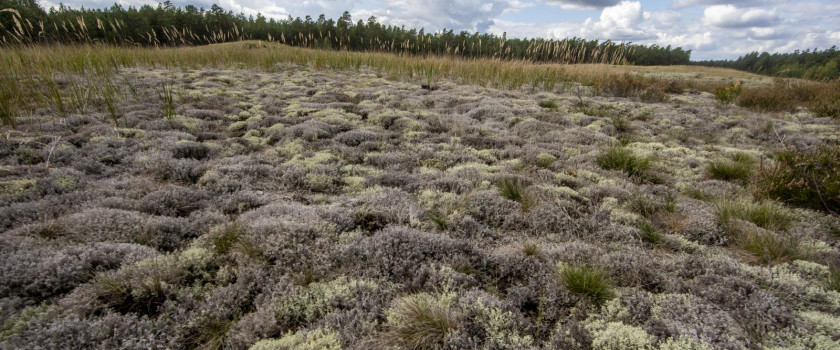
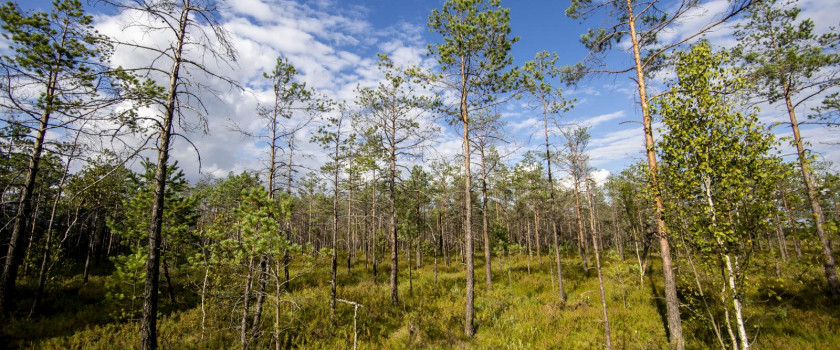
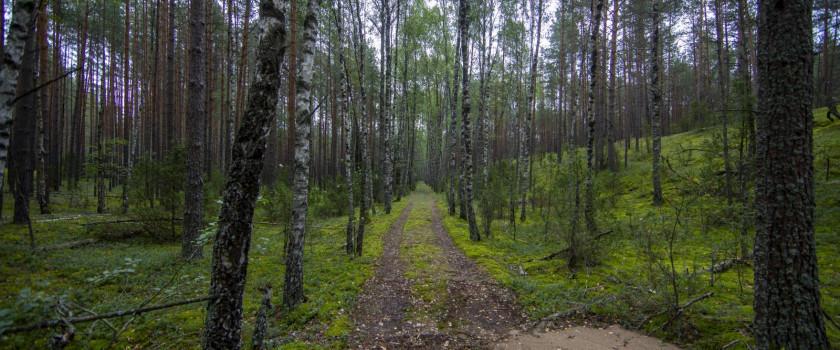
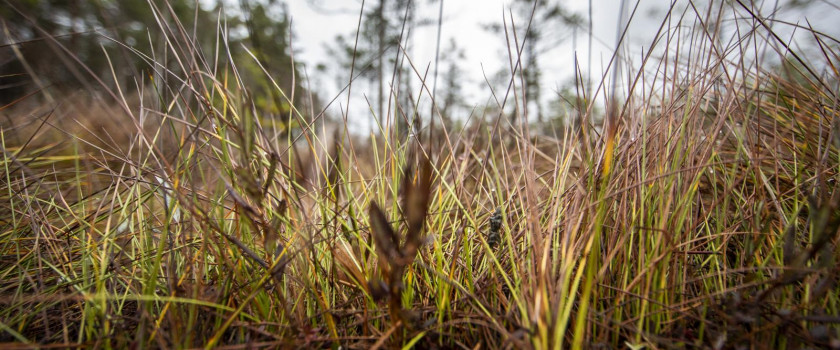
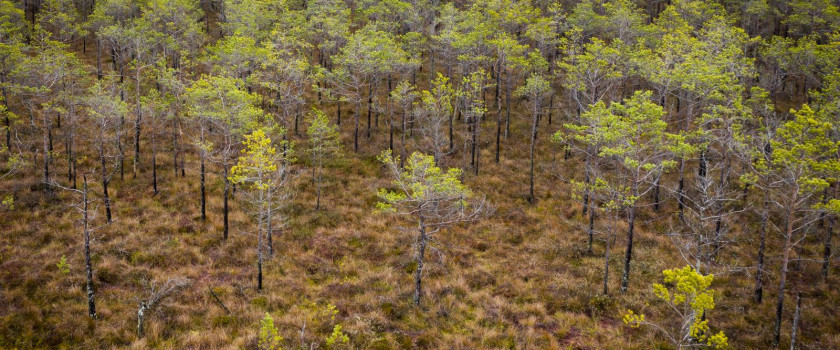
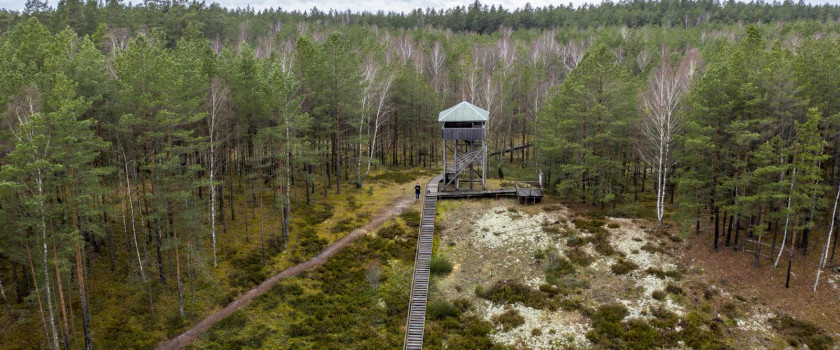
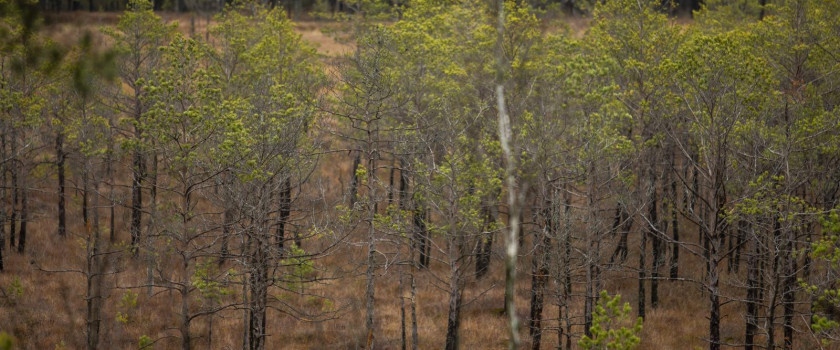
The Čepkeliai Strict Nature Reserve is characterised by nearby plant communities that are more typical in steppe and tundra environments. An extensive carpet of moss is the dominant feature in the raised bog, including peat moss, and abundant scrubs, such as marsh tea, heath and cranberry. The tree storey consists of scanty pines, downy birch and silver birch, and in some areas, there are large open plains remaining. The continental dunes surrounding the raised bog are dominated by mature pine forests with abundant lichen in the forest litter. The islands along the northern dune slopes, plains and hollows are mostly dominated by moss covered pines and shrubs: heather, blueberry and mountain cranberry. This strict reserve is mostly dominated by forest and wetland habitats. Swampy coniferous forests are pre dominant in the forest habitats, while pine forests with small additions of birch are more common along the edges of the wetland. There are several swampy deciduous forests in the south-western part of the strict reserve. Small clusters of species-rich mixed forests are also characteristic.
There are 12 types of natural habitats of the European Community importance found in the the strict reserve. These habitats cover almost entire area of the wetland and large part of the swamp surrounding forest areas. The largest areas (in descending order) are covered by the following habitat types: 91D01 Bog woodland, 7110 Active raised bogs, 9080 Fennoscandian deciduous swamp woods, 7140 Transition mires and quaking bogs, 9010 Western taiga, 91T0 Central European lichen pine forests, 3160 Natural dystrophic lakes and ponds.
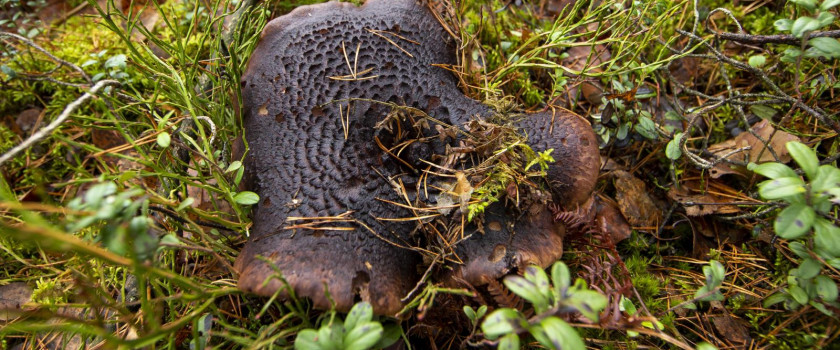
There are 624 vascular plant, 120 moss and 145 algae species registered in the Čepkeliai Strict Reserve. The lichen flora has not been studied systematically. 48 species of lichen and 308 species of fungi are known thus far. 55 plant, 12 fungi, and 7 lichen species found in this strict nature reserve have been included in the Lithuanian Red Data Book. Plant species typically found in wetlands include Lycopodiella inundata, Dactylorhiza maculata, and Salix lapponum, while the broad-leaf forests are rich in Cypripedium calceolus and Botrychium virginianum, and the sandy areas have Arnica montana, Silene lithuanica and Pulsatilla patens. The diversity of species has been determined by unique natural conditions.
The are 874 bug species, 353 Hymenoptera species, and 1, 018 moth species found in the strict nature reserve. 15 insect species, 7 Hymenoptera species, 17 moth species and 32 bird species found in the strict reserve are considered rare.
The range of fish species in this protected area is not very large – there are only 13 known species. The Čepkeliai Strict Reserve is home to 10 amphibian and 6 reptile species. The only venomous snake in the country, the Common Adder (Vipera berus), and the Grass Snake (Natrix natrix), are also found here. There are also habitat of the Smooth Snake (Co ronella austriaca) found in the strict nature reserve.
Of the 183 registered bird species, 126 have been known to nest here. 52 bird species observed in the territory of the strict nature reserve have also been included in the Lithu anian Red Data Book. Čepkeliai has retained the largest populations of Capercaillie (Tetrao urogallus), Crane (Grus grus) and Great Snipe (Gallinago media) in Lithuania, and the Short-toed Eagle (Circaetus gallicus) and Horned Owl (Bubo) which are almost extinct elsewhere, are still found here. Species that are considered rare in other parts of the country are quite common here, such as the Black Grouse (Tetrao tetrix), Corn Crake (Crex crex), Black Stork (Ciconia nigra), Tengmalm’s Owl (Aegolius funereus), Three-toed Woodpecker (Picoides tridactylus), White-backed Woodpecker (Dendrocopos leucotos) and many other species.
There are 41 mammal species living in the strict reserve, of these 10 are included into the Lithuania’s Red Data Book. The Čepkeliai woods are among the major winter grazing grounds of mooses in the country. Other permanently obser ved species include wolves, lynx, otters and beavers.
There are 15 hollow pines (only 4 of these are still green) in the Čepkeliai Strict Reserve, other unique natural heritage objects which bear witness to the tradition of tree-hollow beekeeping in this region. Near the Katra and Paramėlis villages, 8 Stone Age settlements have been found and included into the register of cultural values. Even more items from the early Stone Age and Bronze Age have been found during the exploratory research. All the above provide evidence of early human settlements on the raised bog islands and the surrounding areas.
Čepkeliai is the largest wetland in Lithuania. It is rich in relictious lakes, sand islands, and islets - remnants of continental dunes. The high bog is surrounded by forest-covered continental dunes. A distinctive feature is the wilderness of nature: many natural habitats, plants and animals that have chosen swamps and sand dunes as their home. Čepkeliai have long been known for their cranberry bushes. There are many shaky pines here - relics of ancient beekeeping. Čepkeliai are important to the world - they are a wetland of international significance, a very important European wildlife area.
The Čepkeliai mire has been included in the list of sites protected under the Ramsar Convention. It also has Natura 2000 territory status as a site important for bird protection.

 Cognitive, educational trail

 Geological
 Geomorphologic
 Hydrogeological
 Hydrographic
 Botanical
 Zoological
 Nature school
 Visitor centre
 Cognitive, educational trail

